The short answer: good headshot makeup looks like you on a well-rested day. It evens out distractions, controls unwanted shine and adds just enough definition for the light and crop. It does not need to be heavy, gendered or dramatically different from what you normally wear.
If you never wear makeup, you do not need to start for a headshot. Clean skin, lip balm and a quick shine check can be enough. If you do wear it, build thin layers and judge the result through the camera, not only in the mirror.
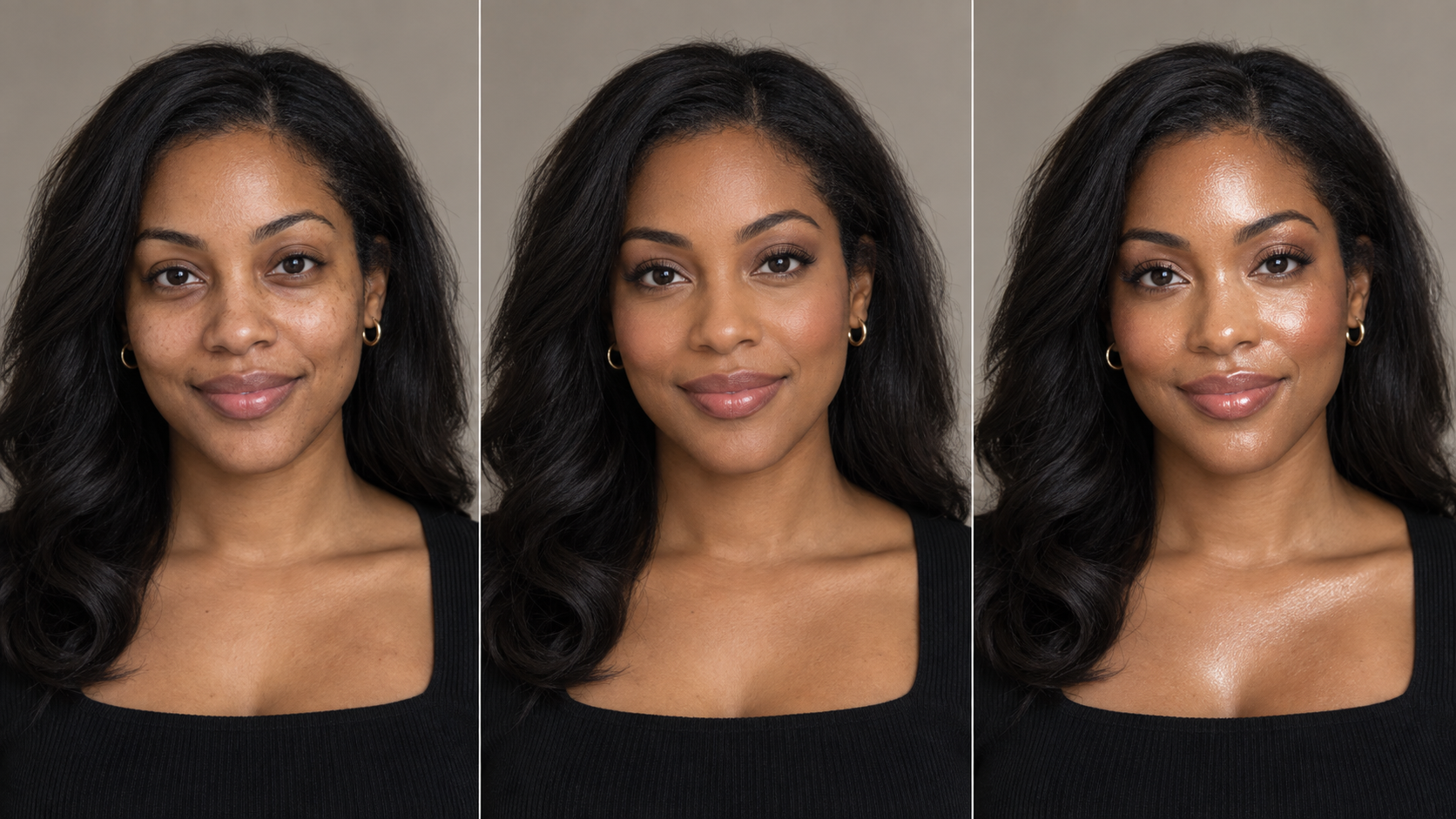
Editorial comparison. The same subject, light and framing make the finish differences easier to compare.
The three looks in the opening image
The same face can read very differently when finish changes:
- Natural/no makeup: real skin texture remains visible. This is completely valid, especially for personal brands built on approachability.
- Camera-ready: light complexion evening, soft eye definition and a natural lip. The face still looks like the person, only more consistent under the light.
- Too reflective for this setup: glossy high points catch the key light and begin to compete with the eyes.
That is the central rule: makeup and lighting are a system. A luminous finish can look beautiful in diffused window light yet create bright hotspots under a harder flash. Test the combination you will actually use.
Research on photographed faces found that both self-applied and professionally applied cosmetics increased perceived skin evenness compared with no cosmetics.1 The useful takeaway is not “more makeup is better.” It is that evenness is one of the visible changes makeup can create.
Prepare skin without creating a slippery base
Start with your normal routine. A headshot day is a poor time to experiment with a new peel, facial or strongly scented product.
- Cleanse gently.
- Use a familiar moisturizer and let it settle.
- Apply your usual sun protection when the session calls for it.
- Blot excess surface oil before adding complexion products.
- Bring the exact products you used for small touch-ups.
Do not chase perfectly textureless skin. High-resolution cameras record skin as skin; aggressive smoothing often makes a portrait feel less believable. The goal is fewer visual interruptions, not a new face.
Control shine selectively
The forehead, nose and chin tend to face the light most directly. Press a blotting sheet or clean tissue onto those areas, then add a small amount of translucent or well-matched powder only where the camera still sees a hotspot.
Keep some natural dimension on the cheeks. Powdering the entire face heavily can make the finish flat, dry or noticeably different from the neck. The University of Kansas portrait guidance likewise warns about reflective elements and suggests an appropriate dulling powder for a shiny complexion.2
Quick camera test: take one close portrait in the final light. Zoom in on the forehead, sides of the nose and chin. If your eye goes to a reflection before it goes to the eyes, blot first and powder second.
Complexion: thin layers beat one thick layer
Use coverage where you want it instead of treating every part of the face equally.
- Begin with a thin layer or spot concealing.
- Check the jaw and hairline in neutral light.
- Add only where redness or discoloration still pulls attention.
- Re-photograph before adding another layer.
Match the face to the visible neck and chest, not to the back of a hand. A subtle mismatch becomes obvious in a tight crop.
If you have facial hair, press product into the surrounding skin rather than brushing a thick layer across the hair. For brows, fill gaps before redefining the entire shape.
Eyes and brows: definition should survive the crop
Headshots are small in feeds and search results, so gentle contrast around the eyes helps. That may mean mascara, softly deepened lashes, brushed brows or simply reducing glare on glasses.
Avoid assuming that “camera-ready” means a sharp wing, false lashes or a sculpted brow. Use the level of definition that fits how clients, colleagues or casting teams will meet you in real life.
Glasses are part of many people’s everyday identity. Clean both sides of the lenses and tilt the frames only if the photographer needs to remove a reflection. Do not remove them automatically.
Lips, cheeks and color
Choose colors that still look like yours after the image is reduced to thumbnail size.
- A tinted balm or satin lip is easier to maintain than a very glossy finish.
- Blush placed where you naturally flush keeps the face from looking one-dimensional.
- Strong contour can change quickly as the light or head angle changes.
- Bring the lip color for a final check after drinking water or changing clothes.
Match the makeup to the job
Corporate or LinkedIn: prioritize evenness, controlled shine and recognizable everyday polish.
Creative professional: keep the same technical base, then allow one intentional signature, such as color, liner, texture or lip.
Actor or model: follow the brief. Casting and agency needs vary; a clean, minimally altered look may be more useful than a finished beauty look.
Founder or creator: choose the version that matches how you appear in meetings and video. Consistency builds recognition.
For the rest of the frame, see our professional headshot guide and business-casual headshot outfit guide.
A five-minute pre-camera check
- Look at the result in the actual shooting light.
- Check face-to-neck color at the jaw.
- Blot, then powder only remaining hotspots.
- Remove makeup or powder from collars.
- Clean glasses and check jewelry reflections.
- Take a neutral frame and a smiling frame.
- Review at normal size and zoomed in.
The University of Iowa’s professional portrait tips recommend good light, consistent focal distance, comfortable posture and simple clothing for more consistent portraits.3 Makeup is one small part of that system.
What to bring
Pack blotting sheets, a pressed or loose powder, lip product, tissues, cotton swabs, a small mirror and your usual moisturizer. Add a comb or brush and a lint roller. That is enough for most headshot sessions.
If you are creating portraits remotely, MyPhotoAI’s creation flow lets you explore polished headshot directions without scheduling a studio day. Keep the result recognizable: the strongest headshot feels refined, not replaced.
FAQ
Should makeup be heavier for photos?
Not by default. Lighting, camera distance and intended use matter more than a rule about “heavier” makeup. Test a thin version first.
Is matte always better?
No. Control distracting hotspots, but keep enough natural dimension for the face to look alive.
Can I wear no makeup?
Absolutely. Clean skin, comfortable grooming and good light can produce an excellent professional headshot.
Should I hire a makeup artist?
It can help when the session has several looks, strong lighting or a high-stakes brief. Ask for someone experienced with portrait photography, and bring references that look like you.


