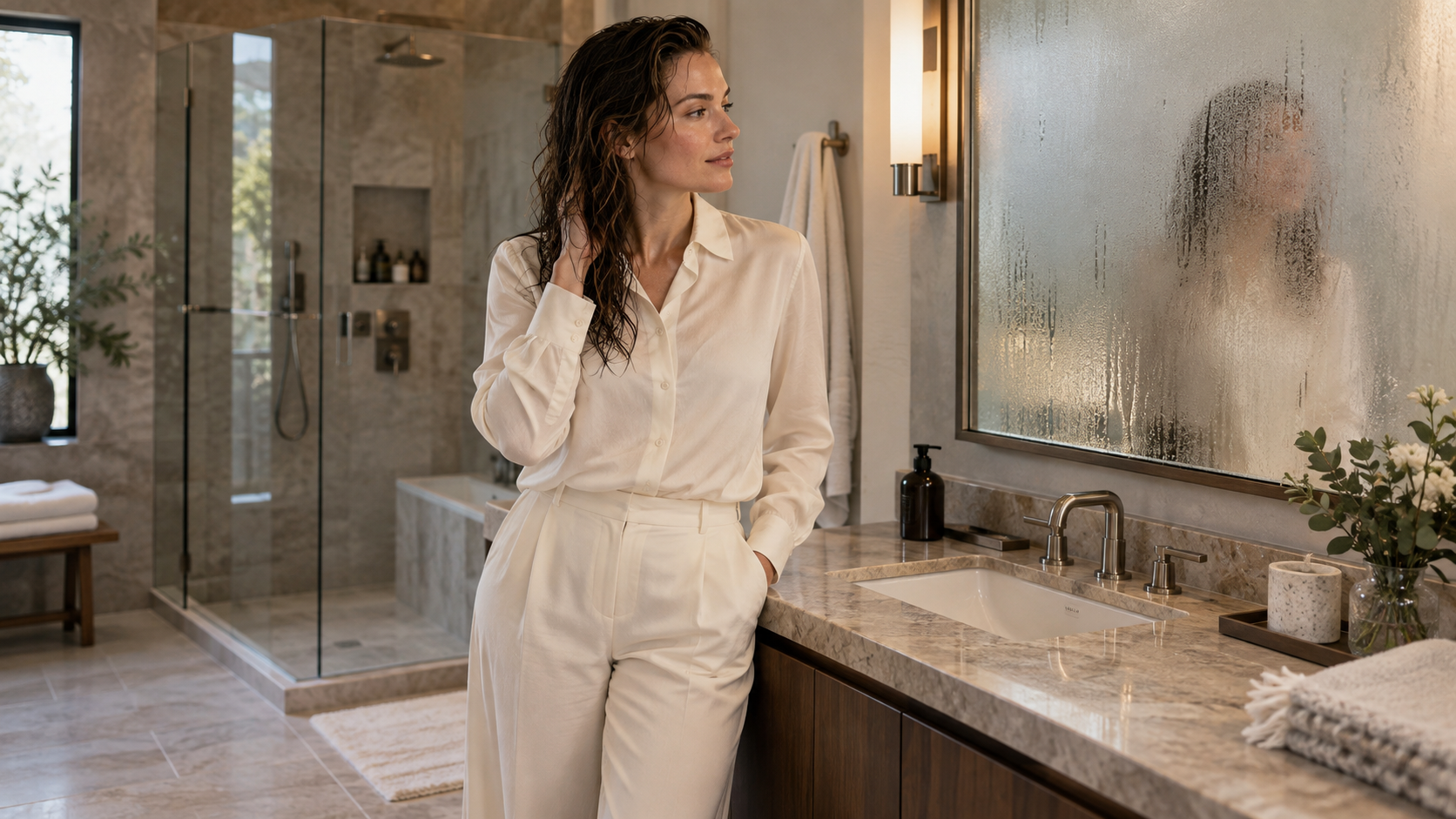
This guide keeps the camera on the dry side of the bathroom, then uses steam, damp hair, glass, reflections, and directional light to tell the story.
This guide is for adult portrait sessions. Keep coverage secure, the floor stable, and mains-powered equipment away from water.
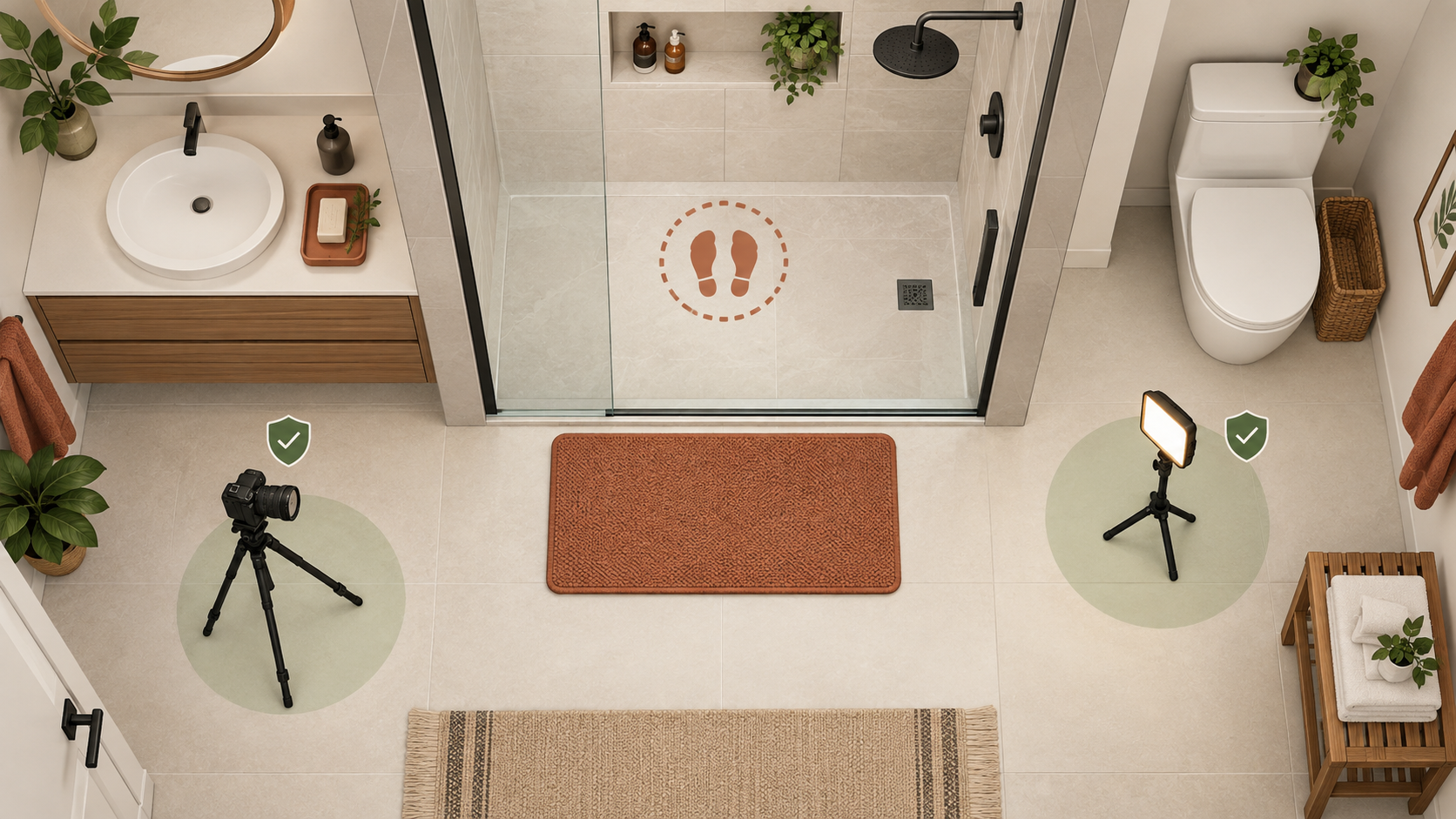
Build the dry zone before making steam
Water and electrical equipment are a real safety boundary. The U.S. Consumer Product Safety Commission explains that ground-fault protection is designed to reduce severe shock hazards near water. 1 A GFCI is not permission to put lights, chargers, extension cords, or a plugged-in camera beside a wet shower.
Use this conservative setup:
- Dry the floor completely.
- Put a nonslip mat outside the enclosure.
- Place the camera or phone on a stable tripod in the dry zone.
- Use window light or a battery-powered light kept beyond splash range.
- Keep towels and a robe within easy reach.
- Remove glass containers, candles, and loose cords.
- Have the subject enter only after framing and exposure are ready.
13 tasteful shower photoshoot ideas
Steam and reflection
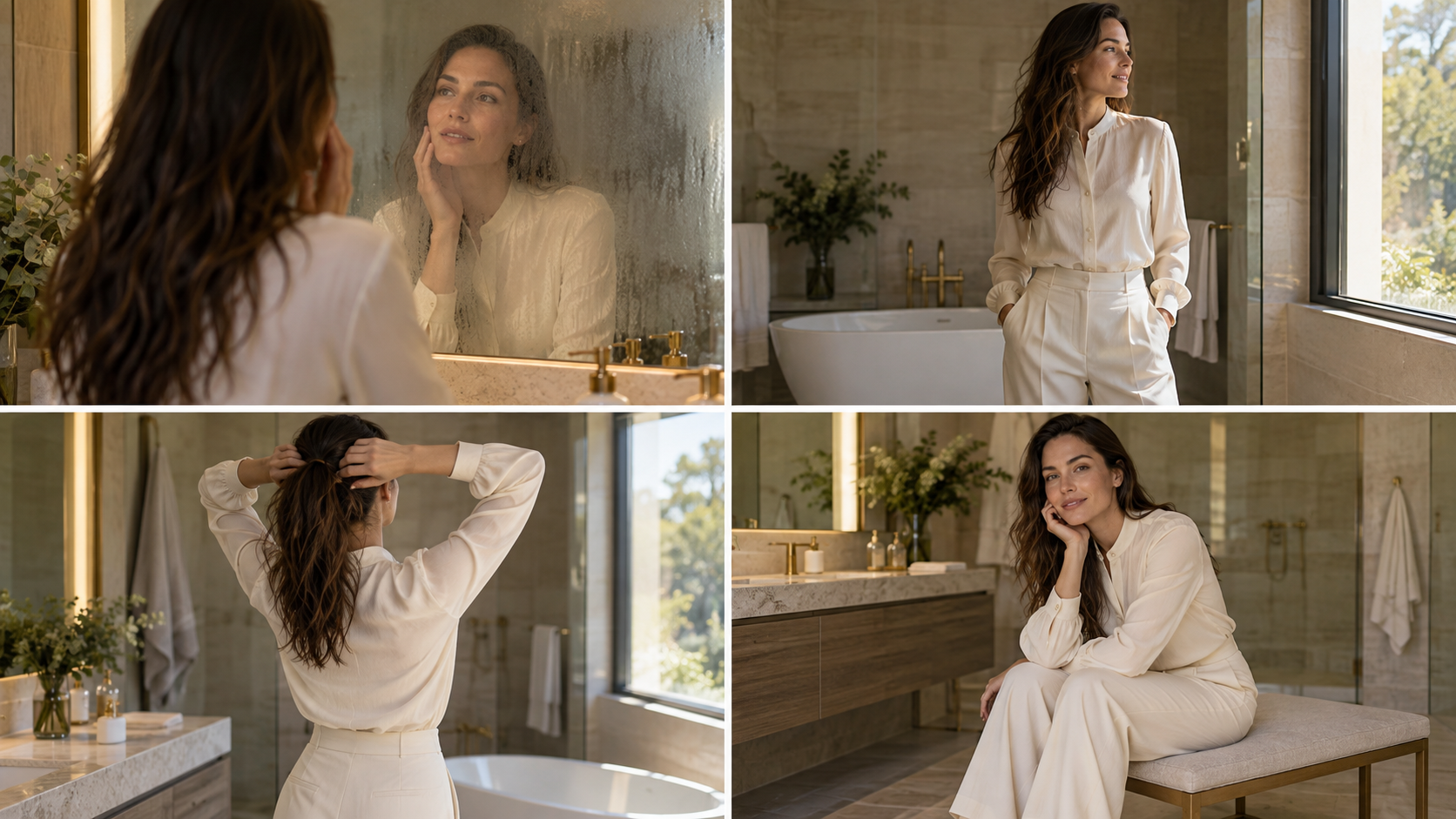
- Fogged mirror close portrait. Wipe one clean patch at face height and let condensation soften the rest.
- Half-clear mirror. Keep one side sharp and one side fogged to create a built-in before-and-after frame.
- Finger-drawn window. Clear a simple arc in the condensation, then compose the face or hand inside it.
- Reflection from the doorway. Stand in the dry hall and use the bathroom mirror to add depth.
Damp-hair portraits
- Hands gathering hair. Turn away from the camera and raise both hands for a strong shoulder line.
- Hair over one shoulder. Face the window and keep the opposite side uncluttered.
- Towel press, not rub. Hold a folded towel against the hair for a still, graphic gesture.
- Comb at the vanity. Use the action to create a natural expression rather than staring at the lens.
Glass and silhouette
- Side profile through textured glass. Use a fully covered outfit or secure robe and let the surface soften details.
- Hand on dry glass. Keep the hand in sharp focus and the face farther behind it.
- Backlit outline. Put a battery light outside the splash zone behind the enclosure and expose for the brightest area.
Bathroom fashion frames
- Monochrome vanity portrait. Use a dark outfit against pale tile and convert after the shoot.
- Window-side full length. Stand on the dry floor, use the shower only as background context, and keep vertical lines straight.
Control steam instead of chasing it
Steam changes quickly. Prepare the room and camera first.
- Warm the room for a few minutes, then turn the water off.
- Wipe the lens and keep it outside the humid enclosure.
- Make the fogged-mirror frames first.
- Clear one mirror edge for the sharper reflection.
- Open the door between setups if the lens starts to haze.
- Keep a dry microfiber cloth only for the lens.
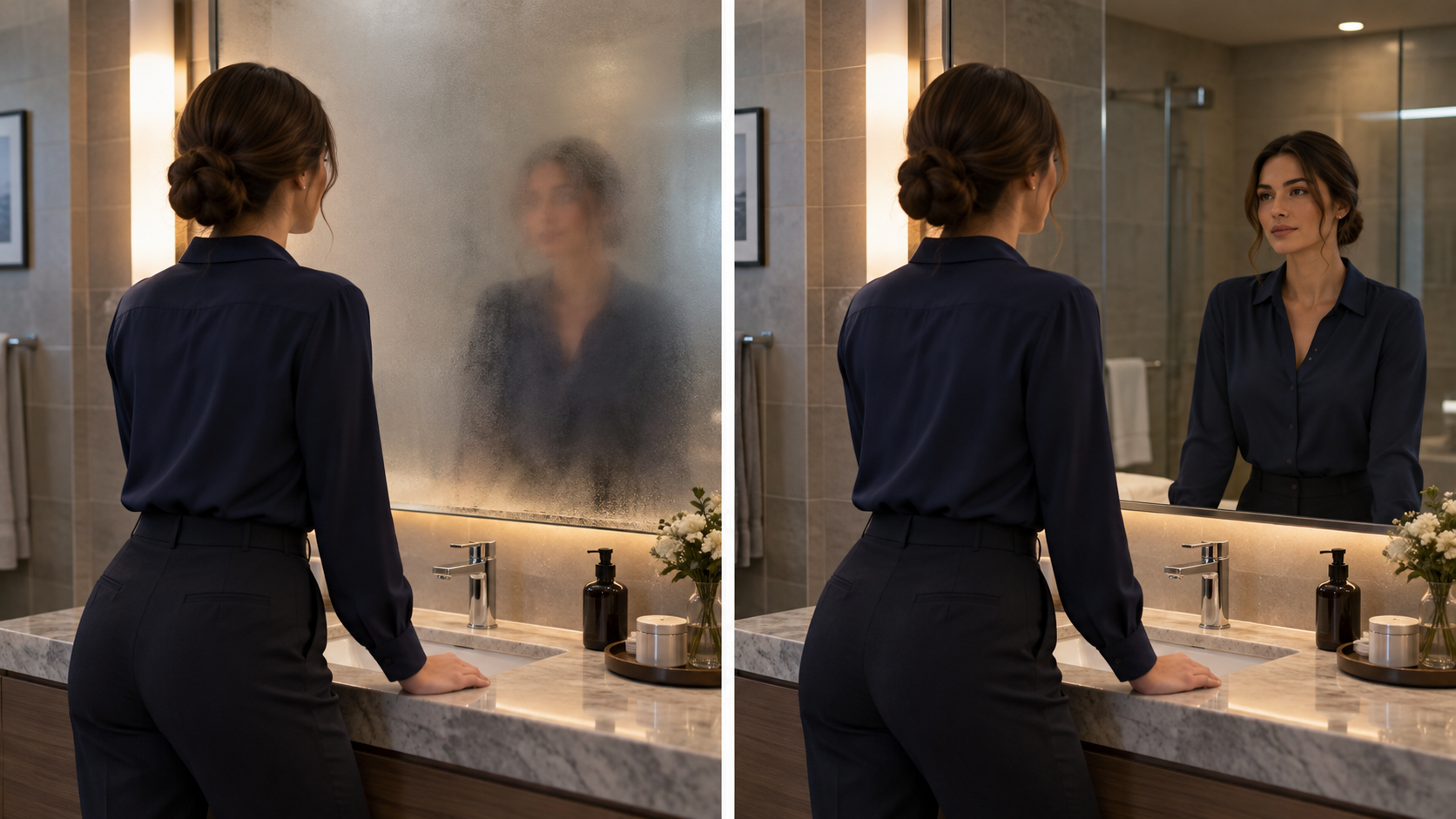
The comparison above shows why more condensation is not always better. Heavy fog produces atmosphere. A clean mirror edge restores eye contact and detail.
Phone setup and camera settings
For a phone:
- Use the rear camera when practical.
- Put the phone on a tripod outside the wet area.
- Tap the face or mirror reflection to set focus.
- Lower exposure slightly if white tile is clipping.
- Use the timer rather than reaching across a wet floor.
Apple's Camera guide shows how to set a timer and enable the grid and level, which helps keep tile lines straight while you stay away from the device. 2
For a camera, begin around 1/125 second for still poses or faster for hair movement. Choose an aperture that keeps the intended plane sharp, then raise ISO only as needed. The exact numbers depend on available light, lens, and distance, so test before anyone enters the wet area.
Coverage and privacy check
Steam and reflective surfaces can hide details in one frame and reveal them in the next. Review:
- mirror edges;
- chrome fixtures;
- glass-door reflections;
- coverage when fabric moves;
- room windows;
- tattoos or other identifiers;
- location information stored in the file.
Apple explains that photos may contain embedded location coordinates and provides steps to remove location metadata before sharing. 3 The pixels and the metadata need separate checks.
If you want the bathroom mood without setting up equipment near water, create a steamy portrait direction with MyPhotoAI. For a wider range of covered and implied compositions, use the implied nude photography ideas guide.
The strongest shower portrait usually comes from restraint: one reflection, one light source, one clear gesture, and a camera that never needs to cross the dry-zone line.


