Why a photo beats a twelve-question quiz
A text quiz measures personality, and personality has no bone structure. Face-matching works on something measurable: every face becomes an embedding, a list of numbers encoding jaw width, brow depth, eye spacing, and cheek line. The matcher measures the distance between your numbers and each archetype's reference geometry, then ranks the results. The photo-based lookalike tool behind our kpop idol page runs the same upload-a-selfie flow, and it beats an answer-based quiz for one structural reason: your face is fixed, so the result is reproducible. Quizzes reshuffle when your mood changes; geometry does not.


The six villain archetypes
The archetypes deliberately cross franchises, and the styling cues are what you would actually buy or paint:
| Archetype | The tells | Styling cues |
|---|---|---|
| The Silent Stalker | Square jaw, heavy brow, still resting face | Pale flat mask, one-color coveralls, dead-center framing |
| The Grinning Clown | Round cheeks, wide mouth, bright eyes | White greasepaint, exaggerated red smile, saturated primaries |
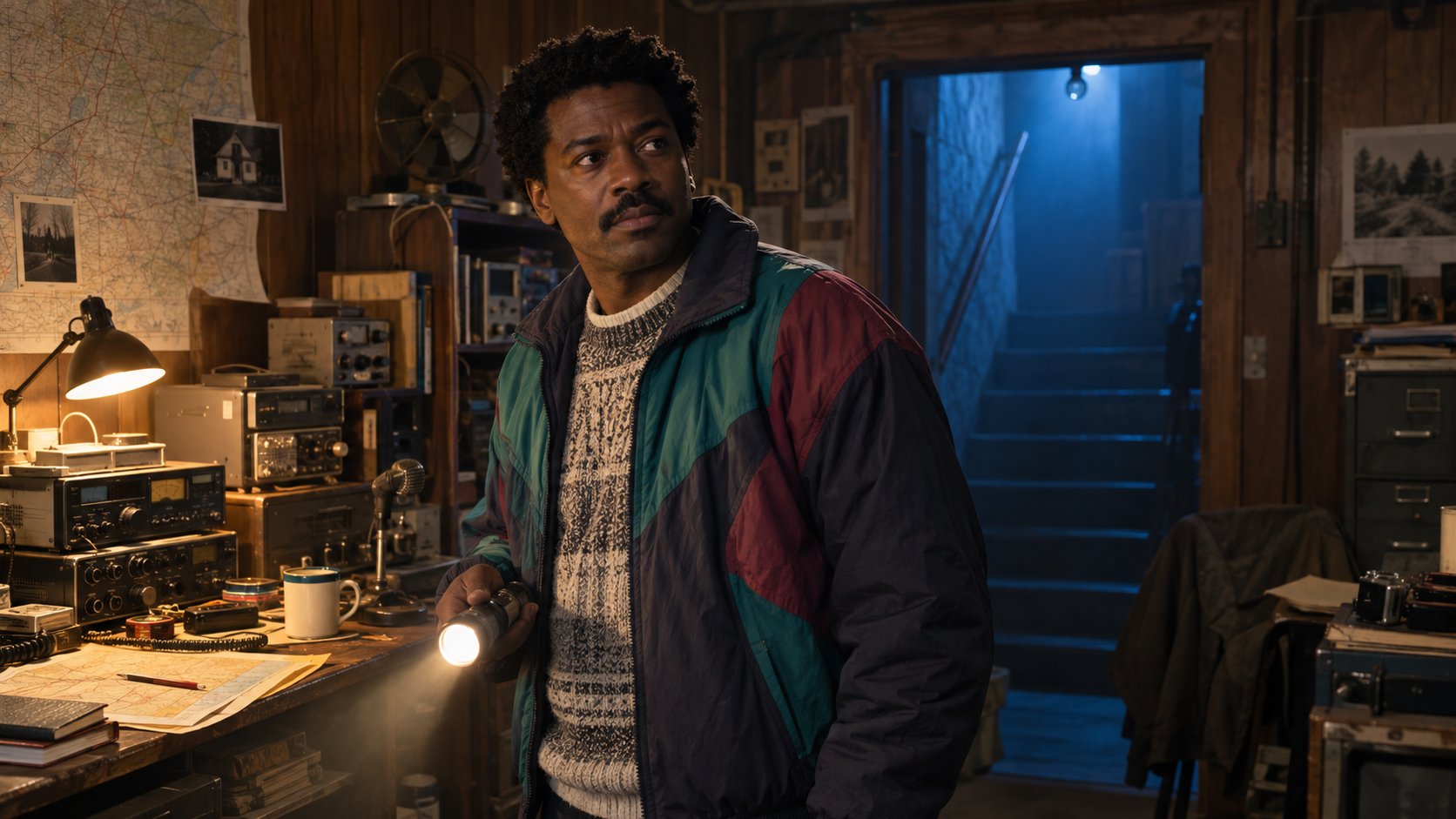
| The Burned Dreamer | Narrow face, sharp cheekbones | Rust-striped sweater, brimmed hat, hard side light |
| The Hair-Curtained Ghost | Soft features, long straight hair | White dress, hair forward, drained cool palette |
| The Elegant Immortal | High cheekbones, groomed hair | High collar, slicked-back hair, deep jewel tones |
| The Decayed Aristocrat | Angular jaw, hooded eyes | Aged lace, cracked-porcelain makeup, muted grays |
The references are factual: the Silent Stalker borrows from the masked-shape tradition of Michael Myers and Ghostface, the Grinning Clown from Pennywise and Art, the Hair-Curtained Ghost from the J-horror tradition behind Sadako and Samara. The matcher maps your features to the archetype, not to a licensed character; the styling cues are generic on purpose, because that is what makes a resemblance you can actually wear.

Curious what you'd look like in this style? Preview it in about three minutes.
See a previewWhat the match actually measures
Distance in embedding space, not personality or taste. Three consequences worth knowing before you run it:
- Hair, makeup, and expression move your result. A grin hides the jaw line the matcher needs; a strong filter sands down the brow. The input photo decides the answer more than the tool does.
- The reference set defines the possible answers. If an archetype is not in the set, no photograph will produce it. Six archetypes cover most faces; a tool with only clowns can only ever find clowns.
- One photo is not a verdict. Shoot three frames on three days and trust the match that repeats.

Shoot the selfie the matcher reads
- Face a window. Daylight, no direct sun, no lamps mixed in. Frontal soft light keeps the geometry honest.
- Hold the phone at eye level. Not above: the up-angle compresses the jaw and brow, which are exactly the features this match reads.
- Neutral expression. No smile, no raised brows. Horror resemblance is mostly bone structure, and an expression hides it.
- Hair clear of the face. The Hair-Curtained Ghost gets its curtain as a costume, not in the input photo.
- No filters, no sunglasses, no hats. Beauty modes are the number-one source of match drift, because they sand exactly the features being measured.
- Shoot three and compare. The archetype that appears twice is your stable match.


From match to costume
The archetype converts to a Halloween plan directly:
- Silent Stalker: the mask-plus-coveralls route is the cheapest accurate costume in horror; the michael myers costume guide covers the mask selection and the doorway shot that sells it.
- Grinning Clown: greasepaint ladder and saturated props; the clown costume guide splits classic party versus creepy carnival.
- Ghost and Decayed Aristocrat: fabric weight and age-down makeup; the scary halloween costumes hub ranks the full horror lineup with budget tiers for each.
- Burned Dreamer and Elegant Immortal: knitwear and collar work; the horror movie character costumes hub maps every archetype here to its franchise traditions.
If you want a broader creature read instead of a villain, the which monster are you guide runs the same face-first logic over the whole menagerie.
Where matches go wrong
- Beauty filters. They widen eyes and narrow jaws, which pushes most faces toward one generic "pretty villain" and away from your actual geometry.
- Group photos. The matcher needs one face per input; crops from party shots carry noise and mixed lighting.
- Halloween makeup on the input. Paint the face after the match. White greasepaint in the input photo erases the skin-tone and eye-socket reads.
- One-photo overconfidence. Lighting at a weird angle produces a confident, wrong answer. Repeated matches across three frames are the only result worth acting on.
Upload five selfies, pick a style, get results back in about three minutes.
Try the generatorThe AI route: villain-inspired, honestly framed
If the match result made you want to see it, the AI route produces the look without pretending to license it. MyPhotoAI takes 5 to 15 selfies and generates portraits in costume-inspired and character-inspired styles with generic names from its events and creative categories; it does not generate a specific copyrighted character, so the promise is "villain-inspired gothic portrait," never "you as the exact figure." Previews arrive in about 3 minutes, watermarked and free to check. HD downloads cost money: Starter $15 for 5 photos, Pro $35 for 20, Premium $65 for 50. The catalog runs 107 looks across 6 categories (42 headshots, 33 creative, 15 boudoir, 7 lifestyle, 5 dating, 5 events). Upload only photos of yourself.
It will not stage a group of slashers with your friends' real faces, and it will not reproduce your actual bathroom mirror shot. It gives a clean, styled portrait in the archetype's mood, which is the part of the game people actually want to keep. Run the match first, decide on the wardrobe second, and the photo lookalike tool link above is the free way to see which archetype repeats.