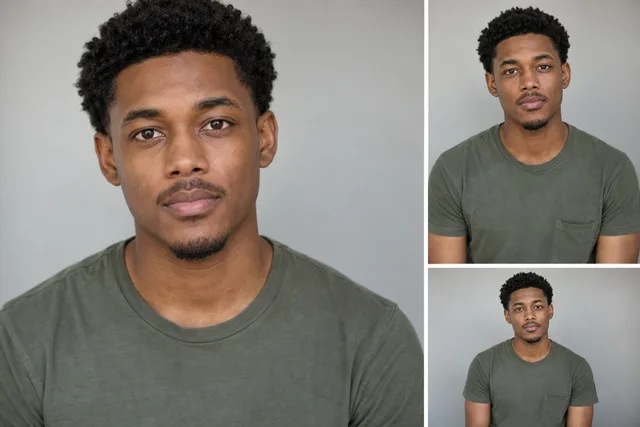
An actor can spend the entire session changing clothes and still end up with three photos that tell the same story. Start with the roles you can plausibly audition for now, then pick clothes that help a casting viewer imagine that range without turning the photo into a costume.
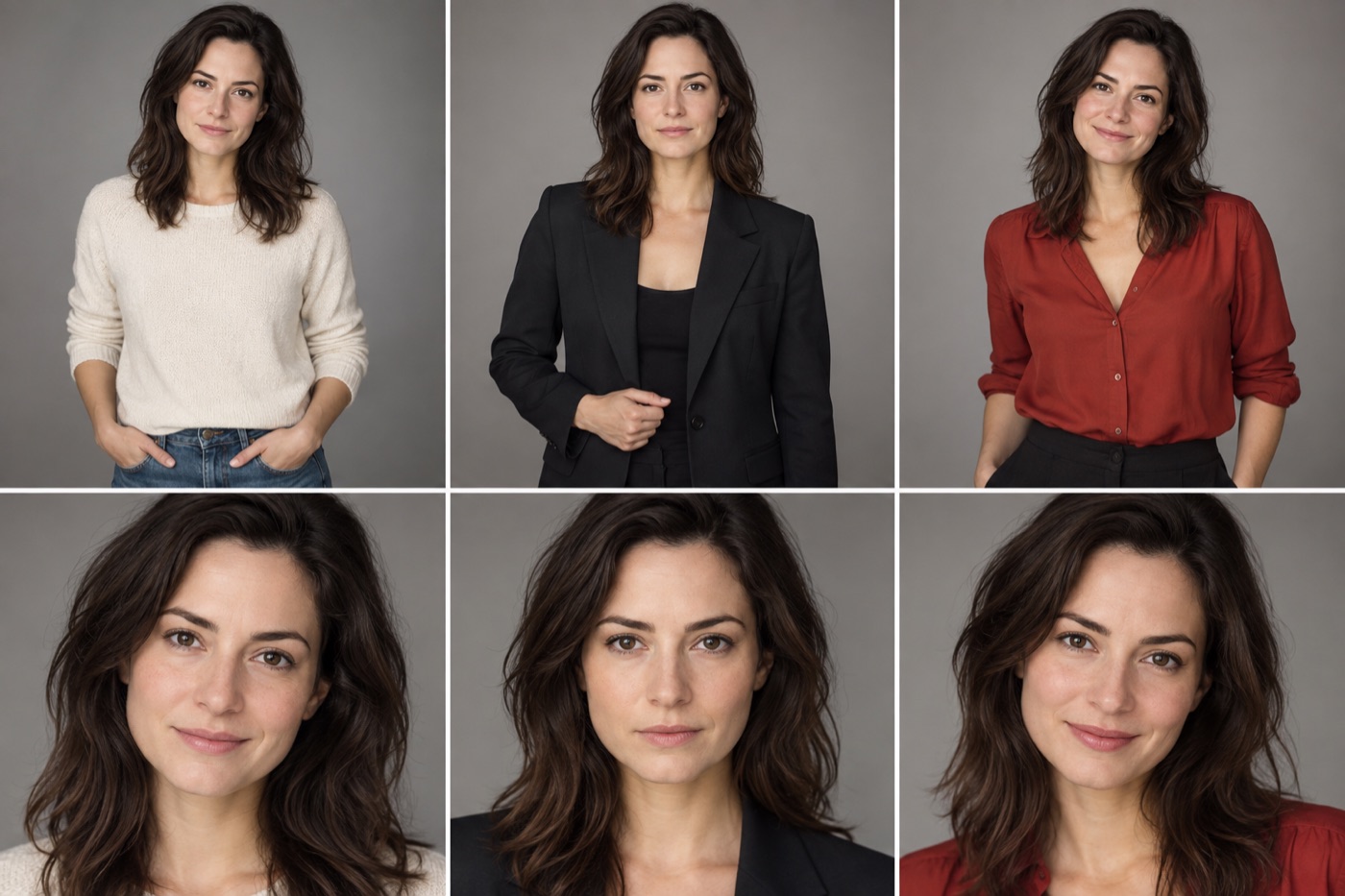
The illustrated lookbook above keeps the same face and simple background while changing the wardrobe. Notice how a knit, a blazer and a plain colored shirt shift the first impression without a prop or character uniform. These are examples, not a claim about which look books more work.
Choose two useful lanes before packing
| Casting lane | Wardrobe starting point | Avoid |
|---|---|---|
| Everyday contemporary | Plain knit or casual shirt that fits well | Large graphics that dominate the crop |
| Professional or authority role | Jacket or structured top you can move in | Stiff clothing you cannot relax in |
| Warm, open commercial energy | Solid color near the face | Busy print that flickers at thumbnail size |
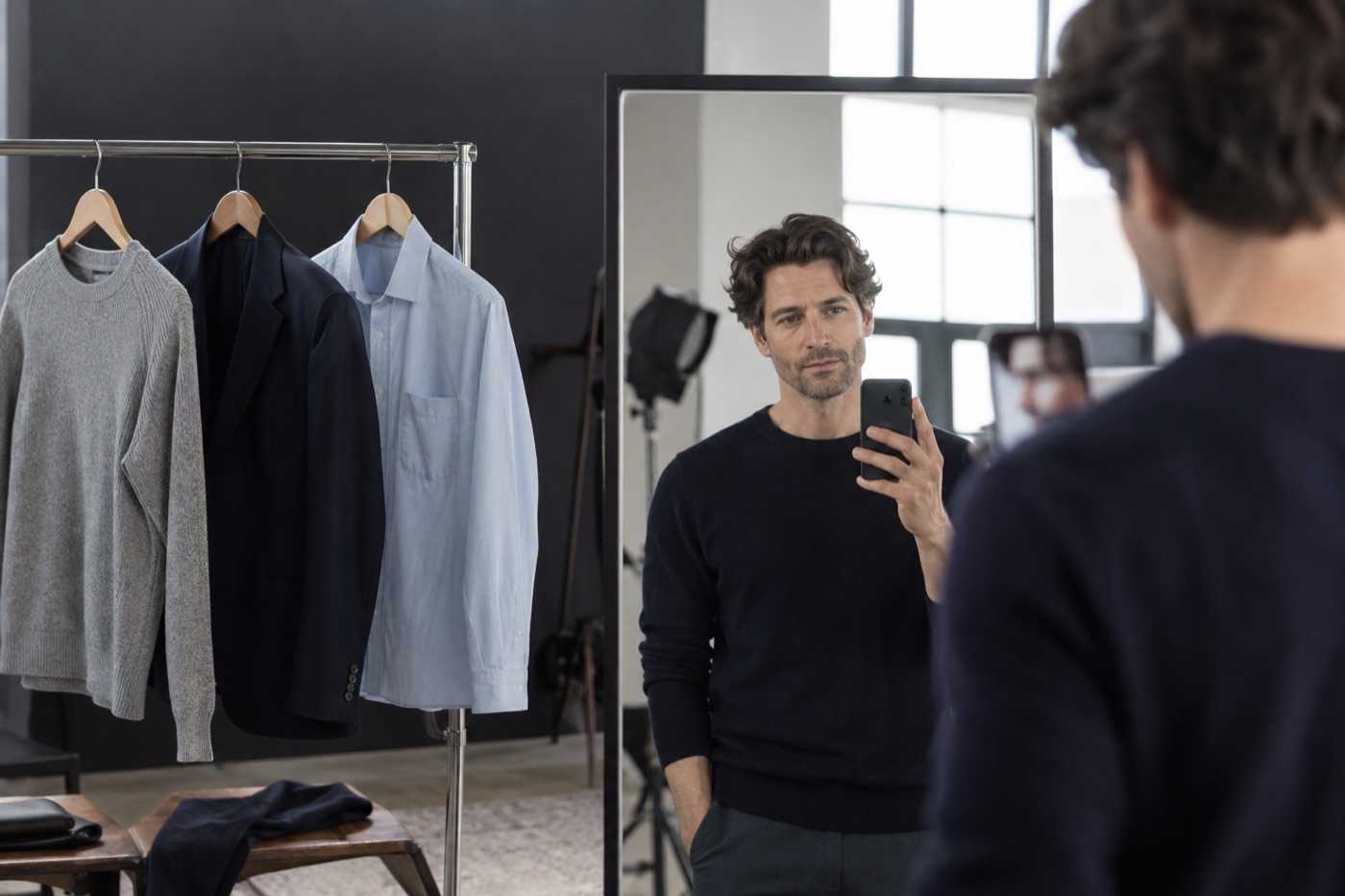
Illustration: pack different role signals rather than repeated versions of the same outfit.
You do not need to play the role in the photograph. Backstage's actor-profile advice warns against costume headshots and recommends images that represent you clearly. 1 A jacket can hint at a professional role; a police uniform or medical coat claims a very specific character. Save character work for the audition.
In a wardrobe guide written by headshot photographer Marc Cartwright, the practical question is whether each clothing change tells a different story for the roles you seek. 2 That is why two distinct lanes are more useful than a suitcase of near-identical shirts.
Check the crop before deciding an outfit works
Lay the clothes out, then look at each neckline and color in a head-and-shoulders crop. A great full outfit may leave only a sliver of bright fabric by your chin. A necklace may disappear. A pattern may become the strongest thing in a thumbnail. The final crop matters more than the mirror view.
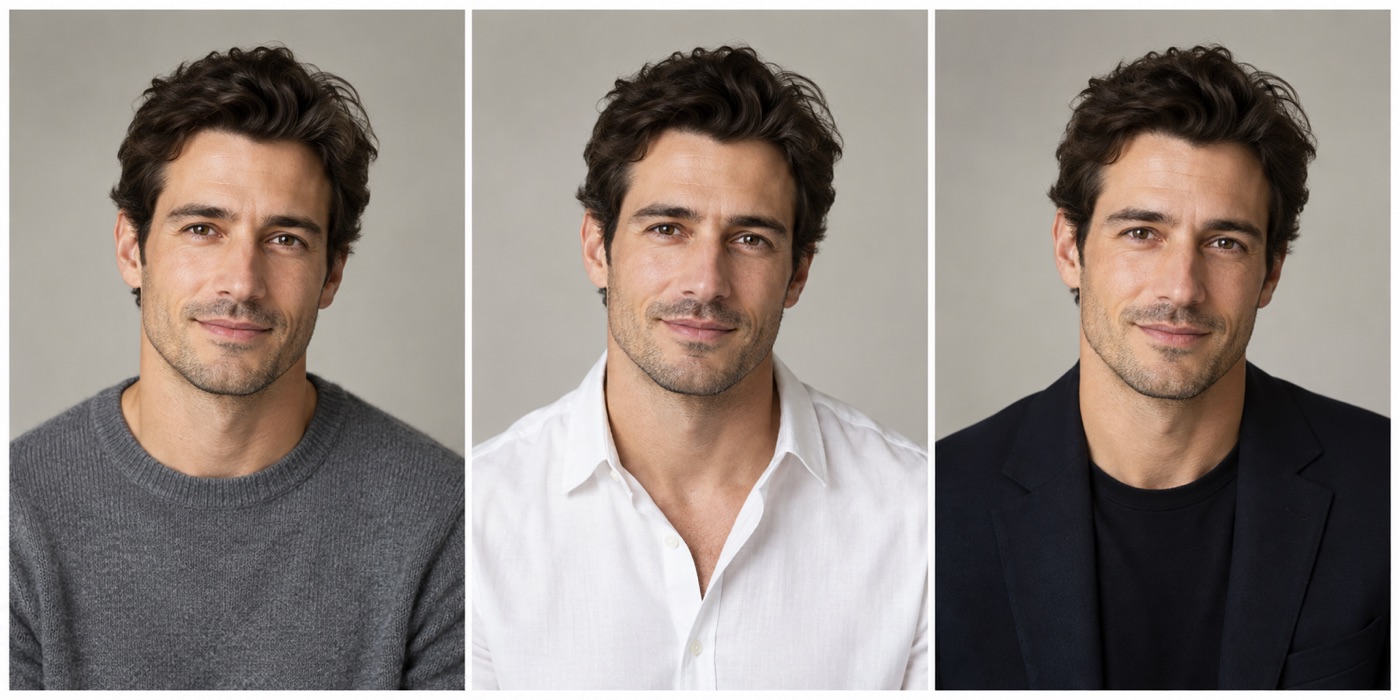
Illustration: plain wardrobe changes can suggest range without becoming costume.
Bring an option with a different neckline or outer layer, not five almost identical shirts. If you wear glasses daily, photograph at least one look with them. Keep hair and makeup close enough to your current appearance that someone using the photograph to invite you in will recognize you.
For expression and category differences, see theatrical versus commercial headshots. For the files you submit afterward, see the headshot dimensions guide. Wardrobe is only one part of a credible actor portrait.
Pack this: two role lanes, one comfortable alternate layer, a lint roller, and a phone photo of each option inside a tight crop.