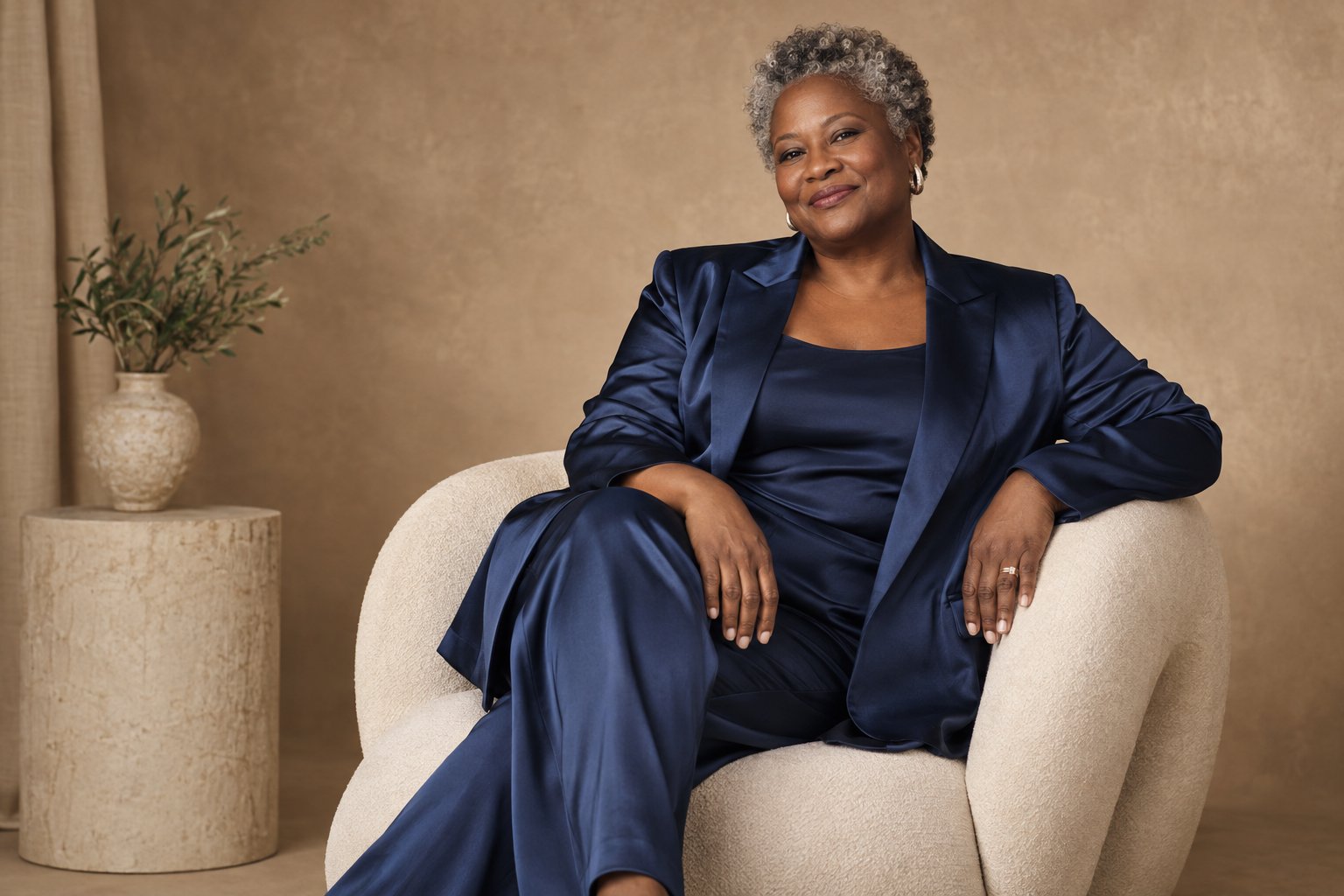
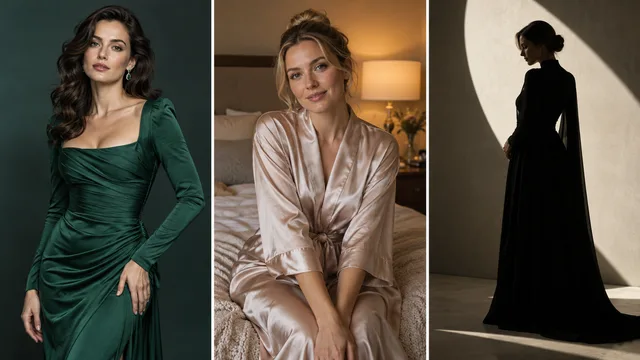
Black and white boudoir photography is not color photography with the saturation removed. It is a decision to build the frame from light, shape, texture, and expression.
The fastest way to know whether monochrome helps is to compare the same photograph both ways. If color carries the story, keep it. If color distracts from the face, gesture, or fabric, monochrome may give the frame more focus.
This guide is for adult portrait sessions with clear consent and agreed coverage.
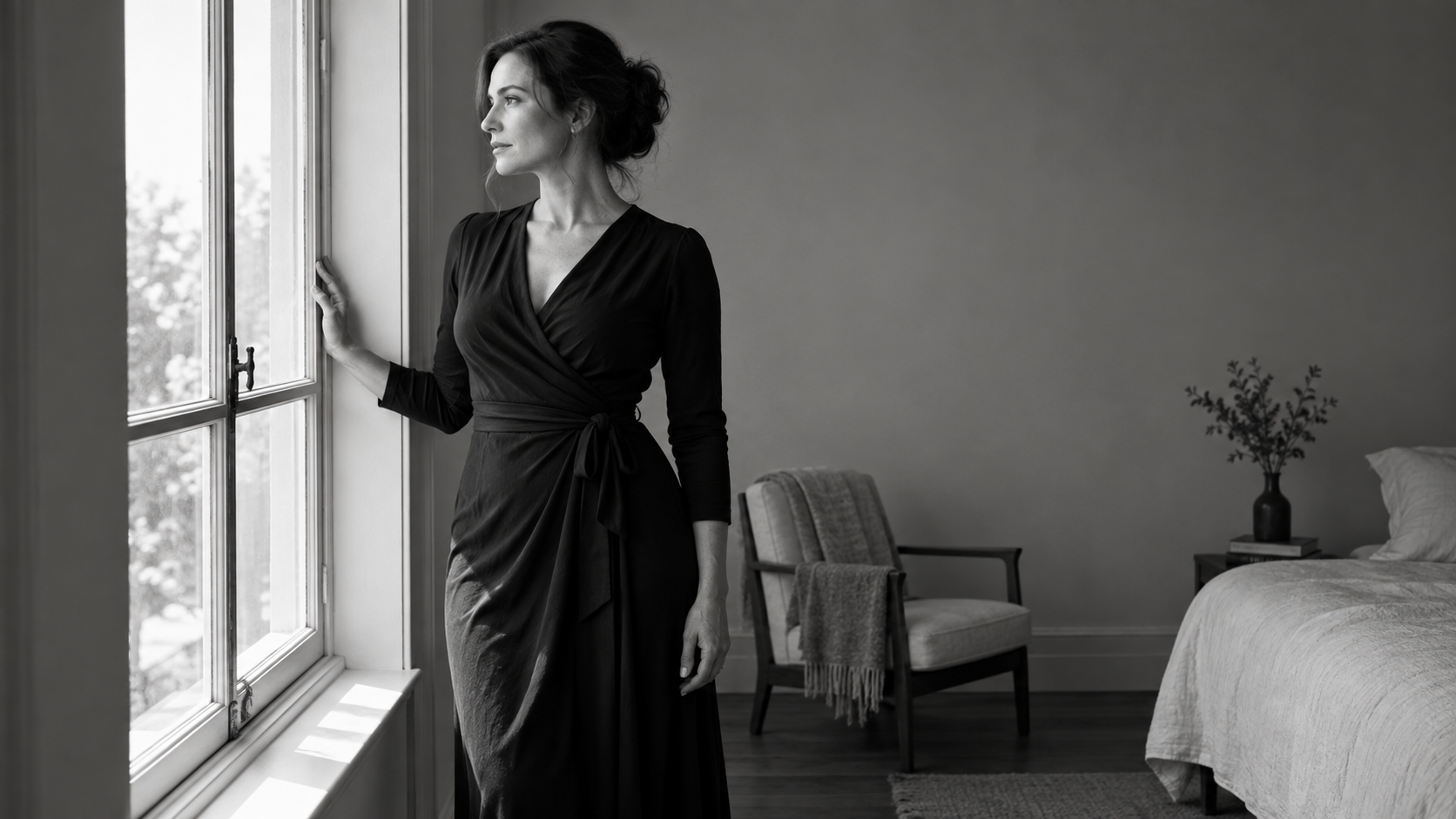
The decision in one minute
Choose black and white when:
- the strongest elements are expression, silhouette, hands, or fabric;
- the room contains competing colors;
- directional light already creates a readable shape;
- the wardrobe has visible texture;
- you want several images from different rooms to feel like one set.
Keep color when:
- the garment color is central to the idea;
- skin, wall, and fabric tones separate poorly in grayscale;
- the scene depends on neon, sunset, or colored practical lights;
- conversion makes the face look flatter rather than clearer.
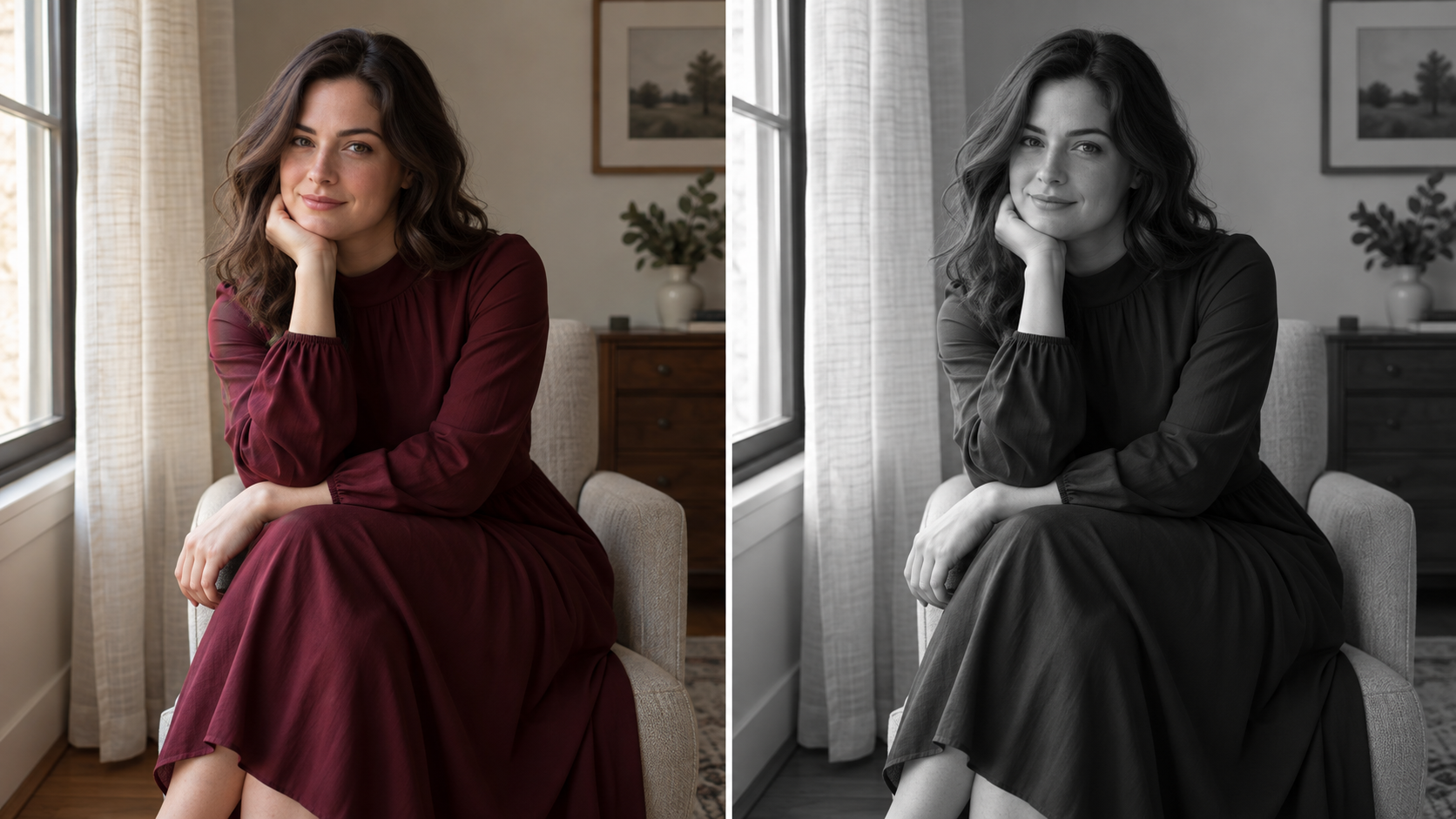
Adobe's black-and-white tools let you change how colors translate into individual gray tones, rather than accepting one automatic desaturation. 1 That matters when a red dress, warm skin, and brown wall look different in color but collapse into nearly the same gray.
Start with shadow, then add detail
Do not begin by making the room dark. Begin by deciding where the viewer should look.
- Place the subject beside a window, not directly in front of it.
- Turn the face toward the light until both eyes are readable.
- Rotate the torso away until the far side becomes a clean shadow.
- Move the subject away from the background so the outline separates.
- Take one frame, then check the histogram and the darkest fabric folds.
A moody photograph still needs information. If hair, dress, and background become one black area, add a pale wall, a curtain edge, or a small reflected fill.
Nikon's portrait-lighting examples pair each result with the recorded setup and exposure, which reinforces a useful habit: treat lighting as a repeatable arrangement rather than a vague mood. 2
High-key or low-key?
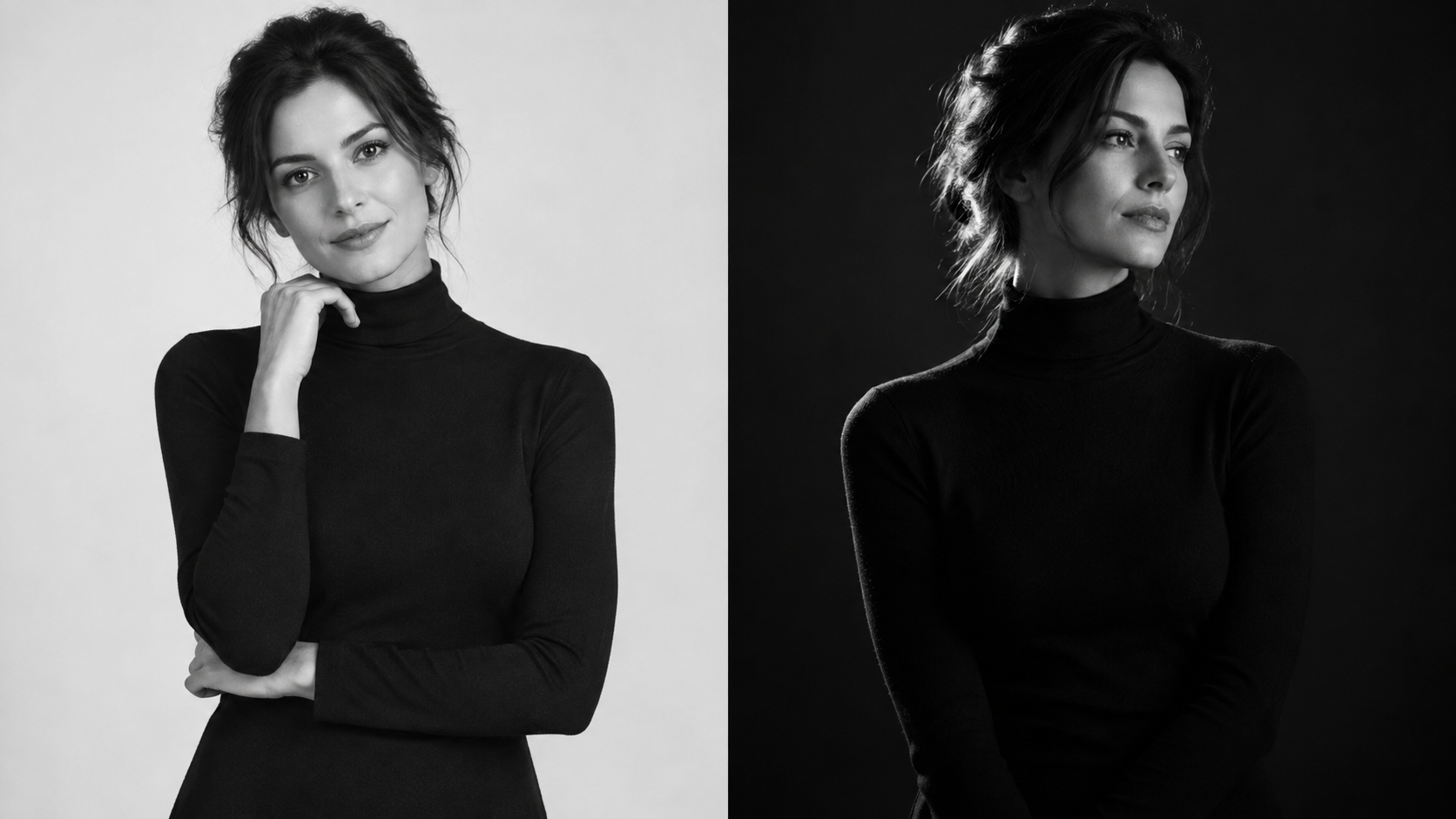
Both styles can feel intimate. The difference is where the tonal weight sits.
High-key
Use a pale wall, white bedding, or a sheer curtain. Keep the face and clothing separated from the background with a gentle shadow. High-key portraits feel open, soft, and contemporary.
Low-key
Use a dark wall or let the unlit room fall behind the subject. Preserve one highlight along the cheek, shoulder, hand, or fabric edge. Low-key portraits feel cinematic, but they become muddy when every dark area has the same value.
The choice is not about which look is more dramatic. It is about whether the subject reads clearly at a glance.
Wardrobe that survives monochrome
Color names matter less than tonal separation.
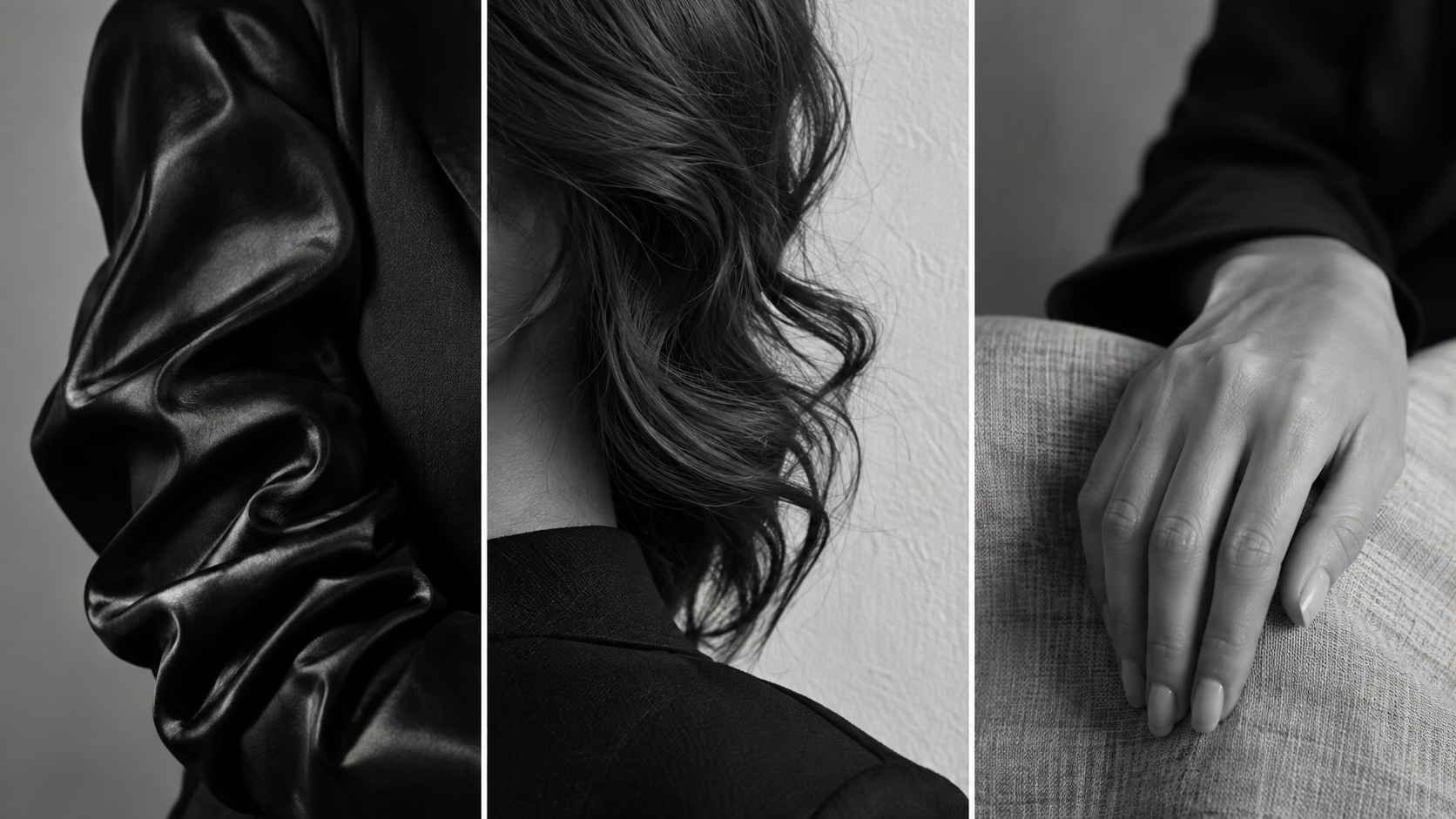
- Satin creates bright edge highlights and deep folds.
- Knit fabric holds middle-gray texture.
- Lace can become visually busy, so keep the background simple.
- White cotton reflects light and can guide attention toward hands and face.
- Black fabric needs edge light or a lighter background to preserve its outline.
The United States Copyright Office says photographic creativity can reflect choices such as angle, subject position, lighting, and timing. 3 Those choices are especially visible in monochrome because color is no longer carrying part of the composition.
A five-slider editing recipe
Work from a duplicate so the color original remains available.
- Exposure: set the face first.
- Whites: raise until the brightest useful detail feels clean, not blank.
- Blacks: lower until the frame has an anchor, but keep texture in hair and fabric.
- Contrast or curve: add a small S-curve rather than crushing both ends.
- Black-and-white mix: lighten or darken the original color channels to separate skin, wardrobe, and background.
Zoom out after every few adjustments. A portrait that looks impressive at 100 percent can become a dark patch at social size.
Four reliable monochrome setups
Window profile
Place the subject parallel to the window and shoot from the shadow side. This emphasizes the nose, lips, shoulder, and fabric edge.
Pale-room high key
Face the subject toward a white wall opposite the window. The wall becomes a large, soft reflector.
Curtain silhouette
Expose for the bright curtain and keep coverage explicit before shooting. Let shape lead, but retain enough edge detail to separate the figure.
Mirror with one clean highlight
Keep the camera outside the reflection. Use one lamp or window edge to illuminate the face, then simplify everything around it.
For more category context, compare glamour, boudoir, and fine-art portrait approaches. You can also create a monochrome portrait direction with MyPhotoAI before committing a whole session to one tonal style.
The best black-and-white boudoir frame is not necessarily the darkest. It is the one where light makes the subject easy to read and everything else easy to ignore.