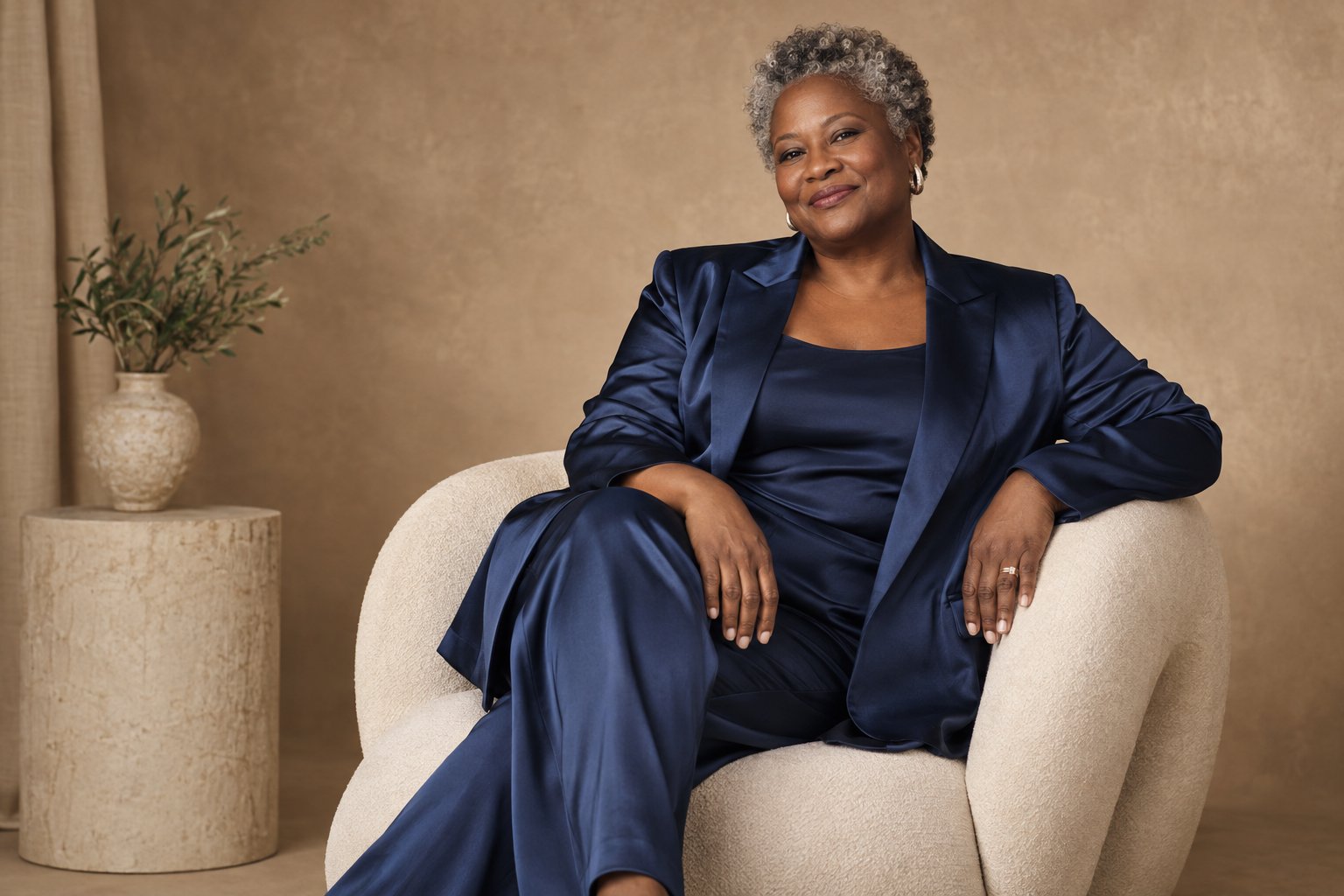
The four mechanics every pose runs on
- Chin out, then down. Forward first, then down. It tightens under the jaw without flattening the face.
- Hands get placed, never dangled. Hair, hip bone, collarbone, fabric, or furniture. A hand with no job reads as a claw.
- Weight on one leg or one hip. Evenly distributed weight is a passport photo.
- Exhale before the frame. Shoulders and stomach drop together on the exhale, which is why the best frame usually lands between directions, not on the count.


Standing frames
- The S-curve. All weight on the back leg, front knee soft, front hip eased toward the light. Does: builds the classic hourglass line from almost any build. Flatters: nearly everyone; it is the default first standing pose.
- Wall lean, shoulder blades on the wall. Hips and shoulders touch the wall, midsection arcs forward, hands loose. Does: adds curve without arching the spine. Flatters: straighter figures who want more shape.
- Crossed ankles, arms folded loosely. Back to a wall, weight stacked on one leg. Does: reads as unbothered confidence. Flatters: beginners who freeze, because there is almost nothing to hold.
- The over-shoulder glance. Body three-quarters away, head turned back along the shoulder line. Does: shows the back and the face in a single frame. Flatters: defined backs and jawlines.
- Arms overhead, hands in hair. Does: lengthens the whole silhouette and lifts the waistline. Flatters: shorter torsos and petite builds.
- The doorway frame. One hand on the jamb, ankles crossed, body filling the opening. Does: borrows architecture for a full-height line to lean on. Flatters: taller frames, and anyone nervous in open rooms.
- Coat drape, nothing buttoned. Wool or denim slipped off one shoulder or worn open. Does: adds texture and coverage while keeping the body line. Flatters: anyone self-conscious about bare arms.

Want to see what poses work on you before booking a shoot? Preview ten variants in three minutes.
See a previewSeated frames
- Chair straddle, backrest to camera. Arms folded over the chair back, chin on the forearms. Does: frames the face and back while simplifying the midsection. Flatters: postpartum clients and anyone wary of their stomach.
- Side sit, one leg extended. Perched on the front edge, one leg stretched long to the floor. Does: writes a long diagonal through the frame. Flatters: legs of any length, because the extension does the work.
- The armchair sideways curl. Knees drawn onto the seat to one side, arms crossed over the top knee, cheek toward camera. Does: softens the mood into intimacy. Flatters: rounder hips, since the lower half becomes one clean line.
- Elbows to knees on a stool. Forward fold, hands loosely clasped, eyes straight down the lens. Does: the most direct, confrontational frame in the set. Flatters: strong jawlines; skip it if under-chin shadow is a concern, because the fold deepens it.
- Floor sit, legs to one side. One hand planted behind, the other at the collarbone. Does: the classic waist-bend line. Flatters: defined waists; less useful when the midsection is the sore point.
- Kneel-sit on the bed. Heels under, spine tall, hands resting on the thighs. Does: the calmest, most symmetric frame available. Flatters: everyone; the safest opening pose while a client settles.

Floor and bed frames
- Side-lying, propped on the lower forearm. Top hand on the hip, top leg stacked or stepped forward. Does: a long S from head to toe, the most reliably flattering lying line. Flatters: curves of every distribution.
- Back down, knees falling to one side. Head tilted opposite the knees. Does: a twist that narrows and curves at once. Flatters: waistlines.
- The bolster arch. Shoulders on the bed, a firm pillow under the lower back, hips lifted. Does: the most dramatic curve in the catalog. Flatters: flexible backs; pairs well with slip dresses and sheets.
- Sit-and-lean-back, palms flat behind. On the floor, knees bent, head dropped back. Does: opens the neckline and lengthens the throat. Flatters: collarbones and necks of any build.
- The reclined diagonal. Head near one corner of the bed, body running corner to corner. Does: makes a small room shoot large and gives a full-body sweep. Flatters: anyone; the best frame when the space is tight.
- Back against the bed base. On the floor, knees up, hands wrapped around a mug or a shin. Does: casual, morning-after storytelling. Flatters: clients who hate posing, because the prop carries the hands.
- The sheer drape. Standing behind a curtain or voile, one shoulder bared, hands gripping the fabric. Does: texture, mystery, and something to hold. Flatters: collarbones and shoulders at any size.


What goes wrong with boudoir poses
- The double-chin drop. Chin straight down folds the jaw. Out first, then down, fixes it.
- The claw. Fingers spread and rigid. Place the hand, then relax the fingers individually.
- The lower-back-only arch. An exaggerated lumbar curve reads as strain because it is strain. Get curves from a soft front knee instead.
- The dead foot. A forgotten flexed foot at the frame's edge. Point the toe or give it a job.
- The countdown pose. Photographers who count to three get locked faces. Shoot on the exhale between directions.
- Copying a pose without adjusting for the body in front of you. Every frame above is a starting point, not a prescription.
Building your set of 20
Order the shoot standing first, then seated, then floor: clients loosen progressively, and the hardest positions come when they have stopped performing. Change wardrobe between the three groups to reset energy; the garment ladder lives in boudoir outfit ideas. These are solo frames. The two-person versions of the chair and bed poses live in couples boudoir poses, and curve-specific adaptations of this same list are covered in plus size boudoir. Most frames here assume side light from roughly 45 degrees; the reasoning is in boudoir lighting ideas. For the broader shortlist of concepts and locations behind these frames, the boudoir photo ideas roundup is the companion page.
Private, no-stranger option. Upload five selfies, get boudoir portraits in about three minutes.
Try the generatorThe AI route, honestly framed
When no shoot is happening, the same frames can be previewed on your own likeness. MyPhotoAI generates boudoir-style portraits from your own photos: upload 5 to 15 selfies, see watermarked previews in about three minutes, and pay only if you want HD downloads, from $15 for 5 (Pro is $35 for 20, Premium is $65 for 50). The catalog holds 107 looks, 15 of them boudoir styles. Two honest limits: the output is a plausible studio-style portrait, not a document of your actual bedroom, and only upload photos of yourself. Try the free preview against the frames above and judge whether it looks like you before spending anything.