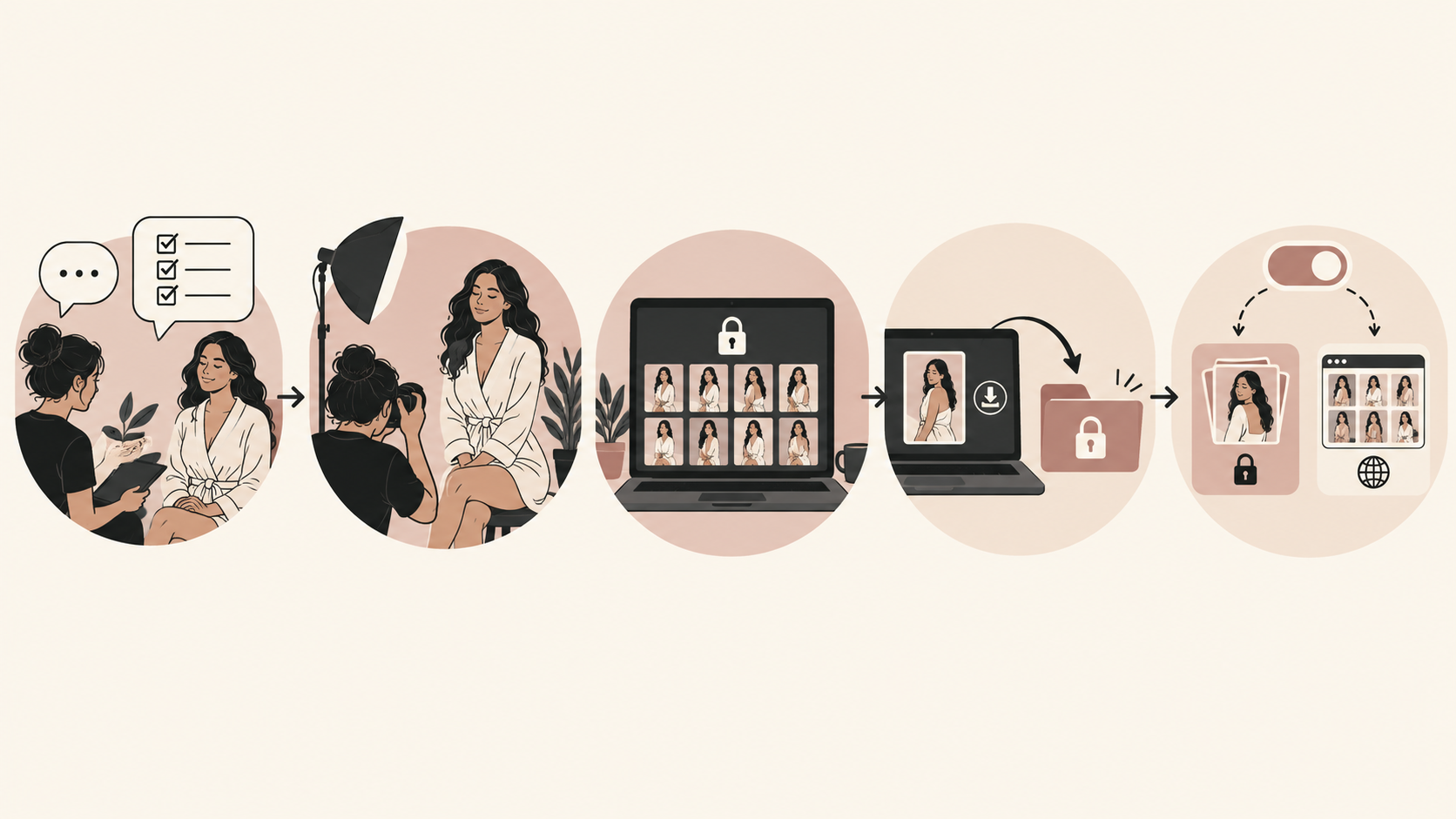
Boudoir photos can be private, but privacy is not automatic. It depends on the contract, model release, gallery settings, download permissions, storage choices, metadata, portfolio approval, and the people who receive the files.
A trustworthy workflow makes each of those choices visible. Do not rely on a verbal promise such as "these stay between us" when the practical details are still undefined.
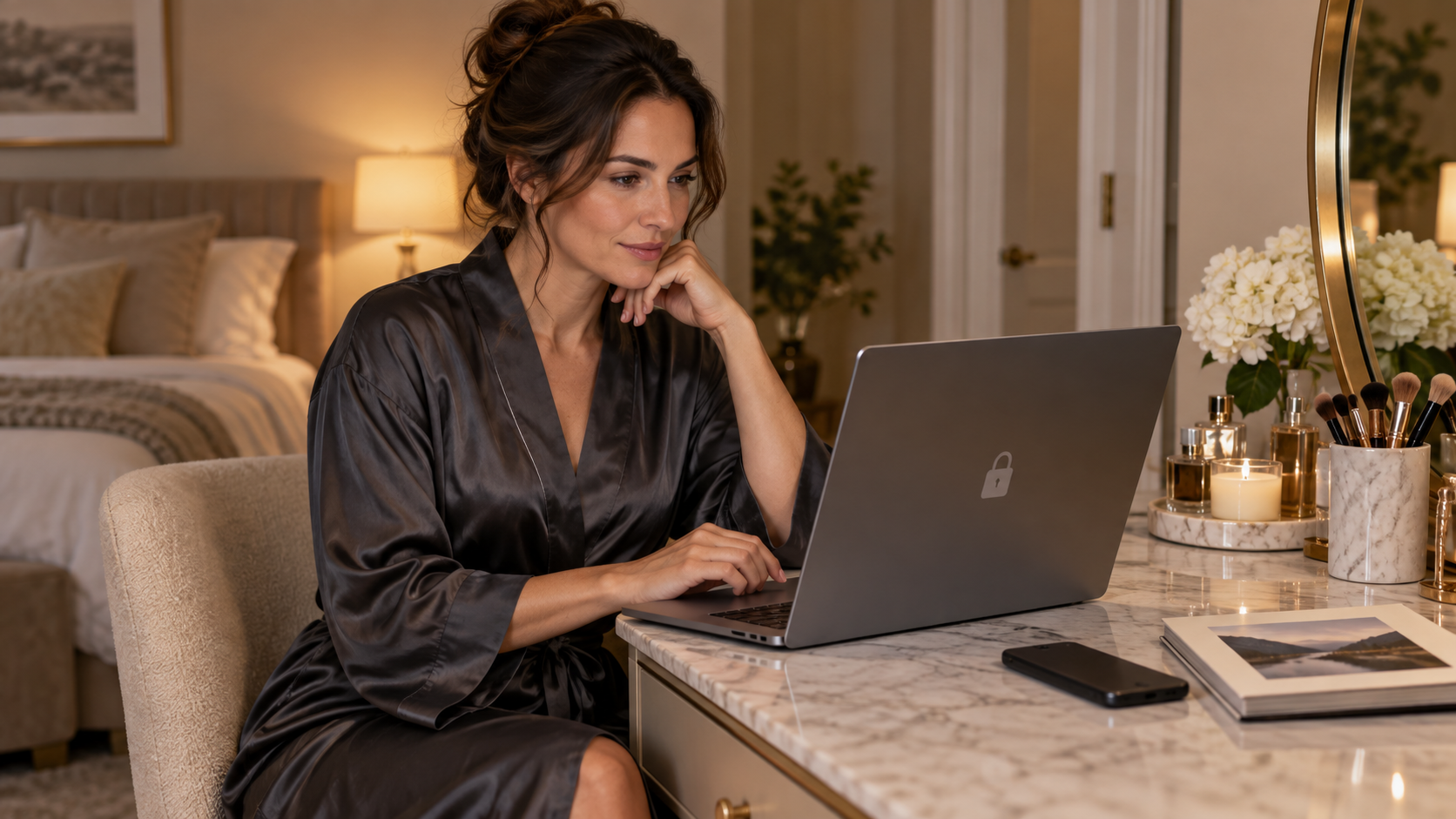
The short answer: privacy depends on agreements and systems
Separate five different questions:
- Creation: who will be present and what may be photographed?
- Review: who can see proofs and unedited files?
- Delivery: who can open, download, print, or forward the gallery?
- Storage: where are files kept and for how long?
- Reuse: may the photographer or another person post, publish, sell, or display any image?
Consent to the session is not the same as permission for a portfolio. Payment is not blanket permission for public use. Password protection does not control a file after an authorized viewer downloads it.
Professional Photographers of America explains that copyright ownership and a photographed person's privacy or publicity interests are separate issues. 1 The exact law varies by location, so treat this checklist as practical planning and ask a qualified local professional about legal questions.
Set consent and portfolio permissions before the session
Ask for clear written answers to:
- Which wardrobe and coverage boundaries apply?
- Is the face allowed in every image, selected images, or none?
- May assistants, makeup artists, or retouchers see the files?
- Are behind-the-scenes photos or video prohibited?
- May the photographer show images privately to prospective clients?
- May any image appear on a website, social account, ad, award entry, or publication?
- Can portfolio permission be limited to individually approved finals?
- How can permission be withdrawn for future uses?
- What happens to rejected or unedited files?
A faceless frame can reduce recognizability, but it is not automatically anonymous. Tattoos, jewelry, room details, body art, and file metadata may still identify a person. That is why faceless boudoir belongs inside a privacy plan rather than being treated as a separate guarantee.
For a wedding gift or milestone session, the bridal boudoir guide can help with the creative plan. Keep the delivery and partner-access decisions separate.
Review gallery passwords, downloads, storage, and retention
A private gallery should be difficult to discover and difficult to open accidentally. ShootProof recommends private direct-link galleries, strong passwords, visitor tracking, and permissions tailored to the client. 2
Ask the photographer:
- Is the gallery indexed by search engines?
- Does it require a password?
- Are downloads protected by a separate PIN?
- Can visitors see or download the whole gallery?
- Are visitor actions logged?
- Can favorite lists or comments expose image thumbnails?
- When will the gallery expire?
- Are backups deleted on the same schedule?
Pixieset also documents gallery passwords, download PINs, and contract terms as separate protection layers. 3 A password controls entrance. A download PIN controls copying. Contract language defines the agreement. None replaces the others.
After downloading, place the files in an encrypted device or folder you control. Avoid a shared family photo library unless every member should have access. Check whether messaging apps automatically save received images to a camera roll or cloud backup.
For partner sessions, decide whether each person receives the entire set or only mutually approved images. The couples boudoir photography guide covers the shared creative side, but each person still needs a say in access and posting.
Remove metadata and share files deliberately
Photos can include location, date, device, and camera details. Apple explains that iCloud Photos uses encryption and provides controls for app access and shared-photo metadata, including the ability to remove a photo's location before sharing. 4
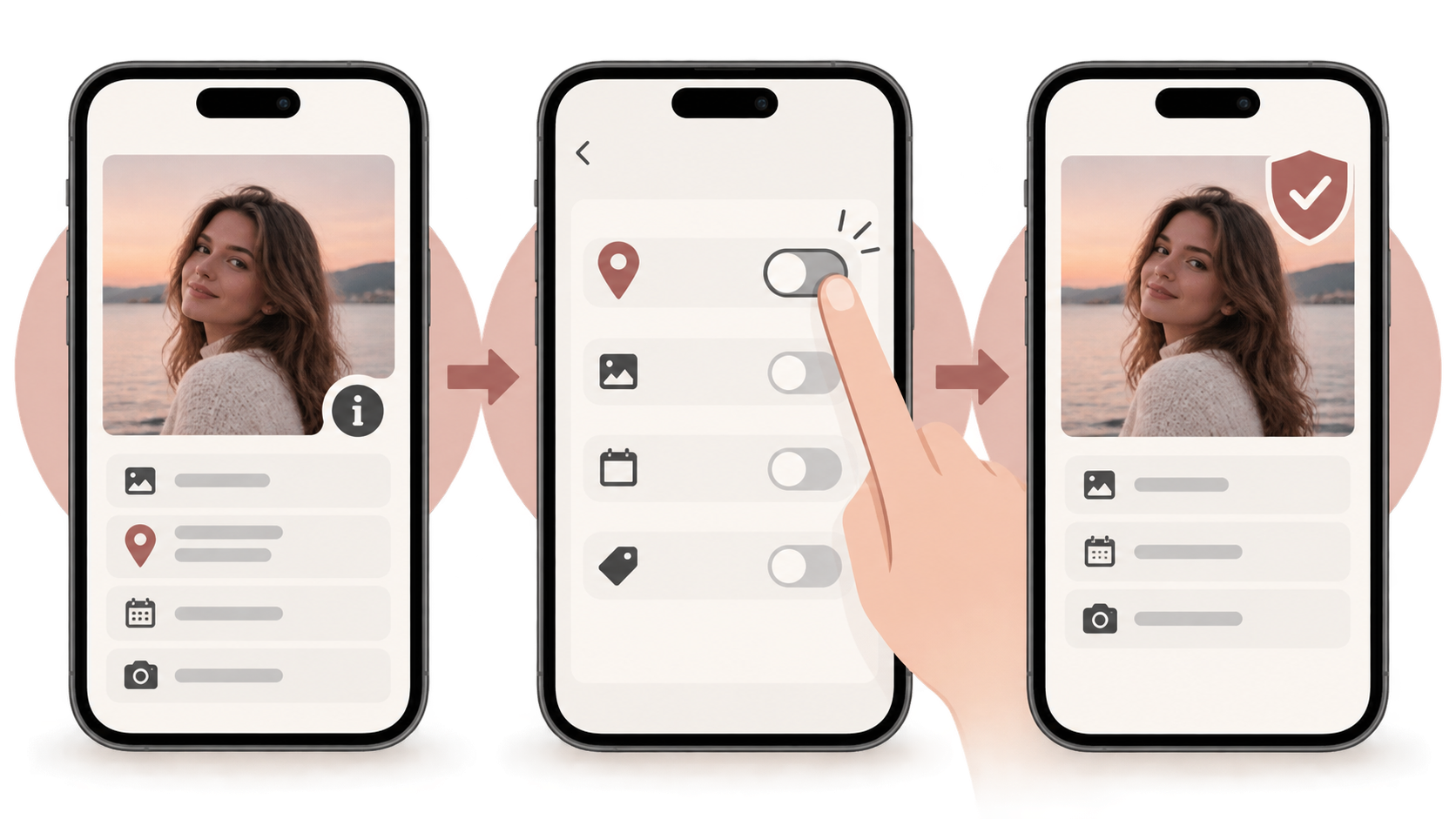
Before sending a file:
- Open the photo information panel.
- Check for a map or location field.
- Remove the location when it is not needed.
- Export a copy rather than altering your only master.
- Send through an agreed channel.
- Confirm whether the recipient's app saves images automatically.
- Delete temporary exports after delivery.
Metadata removal does not make a photo anonymous. The image itself may show a face, tattoo, reflection, home interior, or skyline. Review pixels and metadata as two separate layers.
Use the final privacy checklist before sending or posting
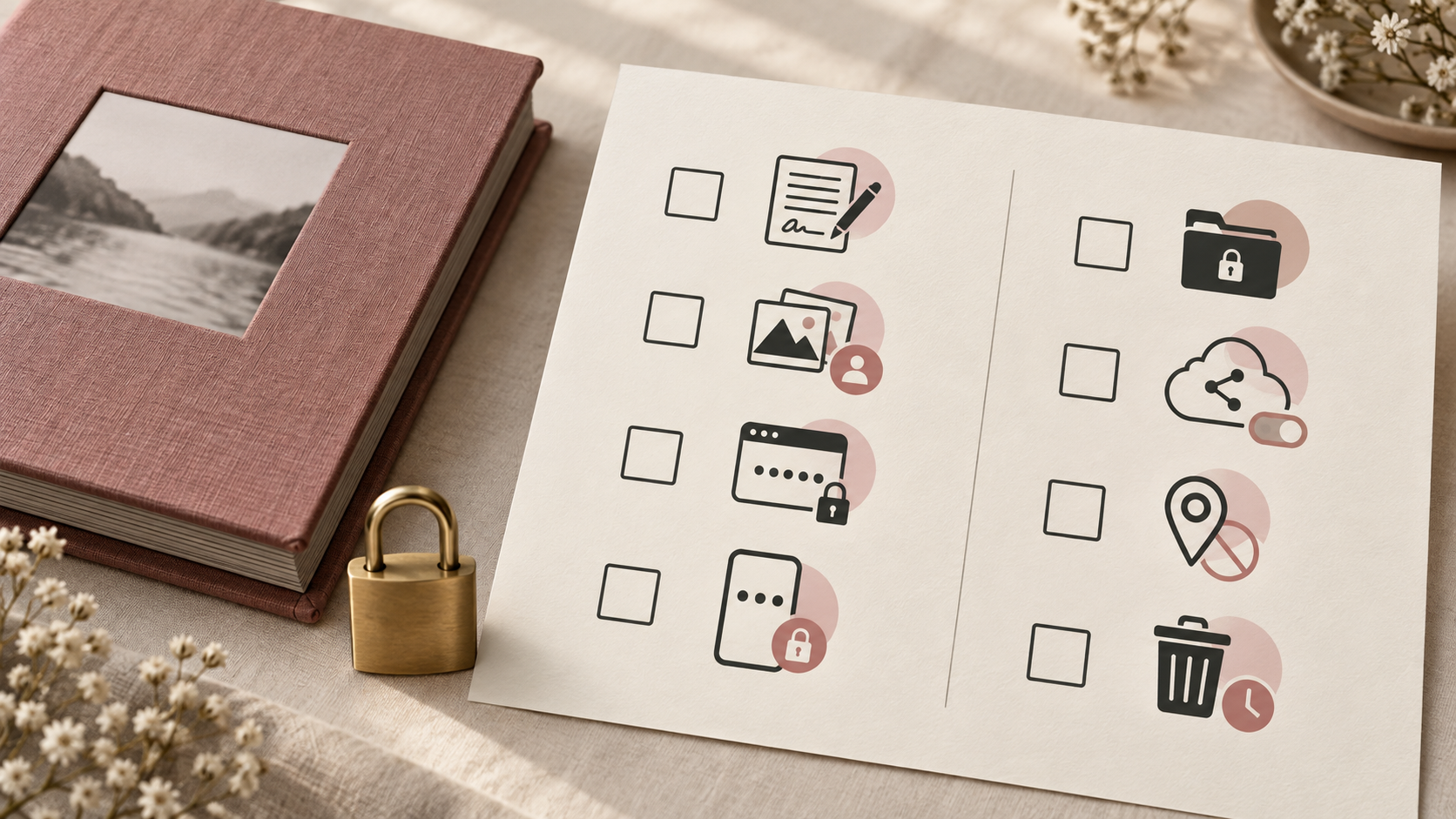
Agreement
- All subjects are adults and agreed to the session.
- Coverage and pose boundaries are written down.
- Portfolio and promotional use have a separate answer.
- Third-party retouching and assistant access are disclosed.
Gallery
- The gallery is unlisted and password protected.
- Downloads use a separate PIN when available.
- The gallery expiration date is known.
- Unedited and rejected files have a retention plan.
Personal storage
- Downloads go to a private, encrypted device or folder.
- Shared albums and family libraries are disabled.
- Automatic cloud and messaging-app saves are understood.
- Temporary copies are removed after use.
Sharing
- Location metadata is removed when appropriate.
- Reflections and identifying details have been checked.
- Every recipient is named and trusted.
- Public posting has explicit approval for that specific image.
If the purpose is still exploratory, start with a private set and conservative sharing. You can approve a specific final image later. For creative inspiration, browse boudoir photo ideas, or open the Silk Robe Boudoir look for a covered, private-feeling starting point. Then return to this checklist before any file leaves your control.