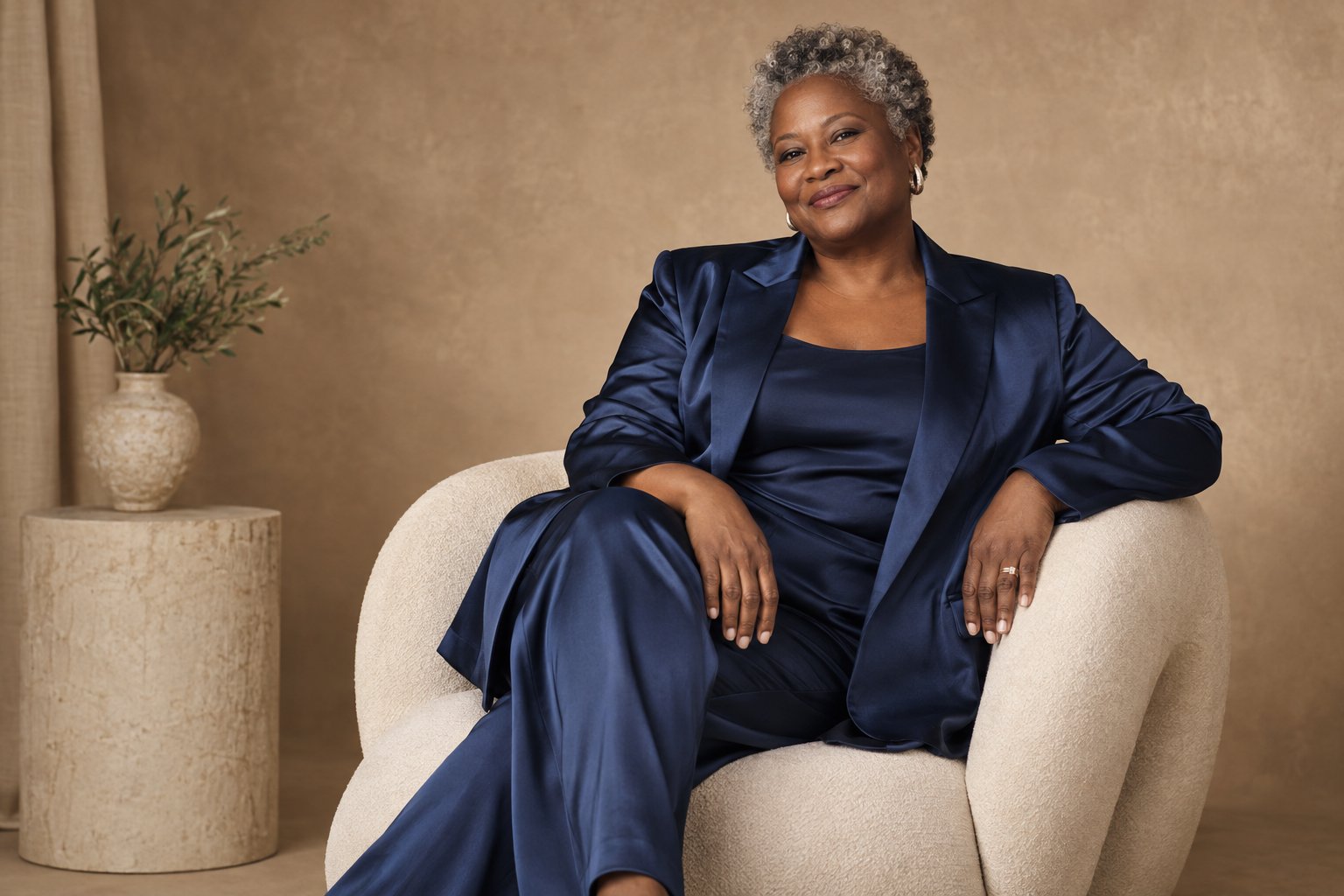
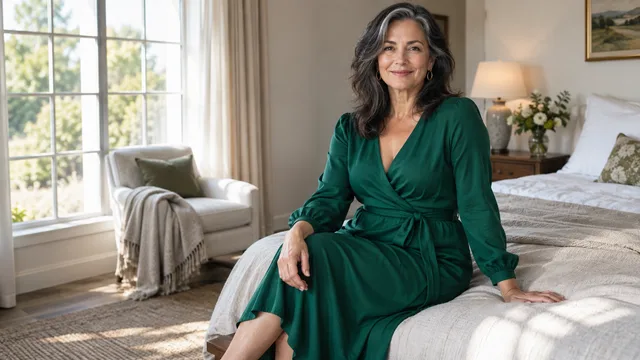
A hotel room can make an adult portrait session feel cinematic, but the room is only useful if you arrive with a sequence. Otherwise the booking disappears into wardrobe changes, furniture moving, and repeated versions of the same bed pose.
This guide turns one room into a practical route: doorway, chair, window, mirror, bed edge, and final close portraits. Check the property's photography rules before booking, keep the room undamaged, and use only adult participants who have agreed to the session.
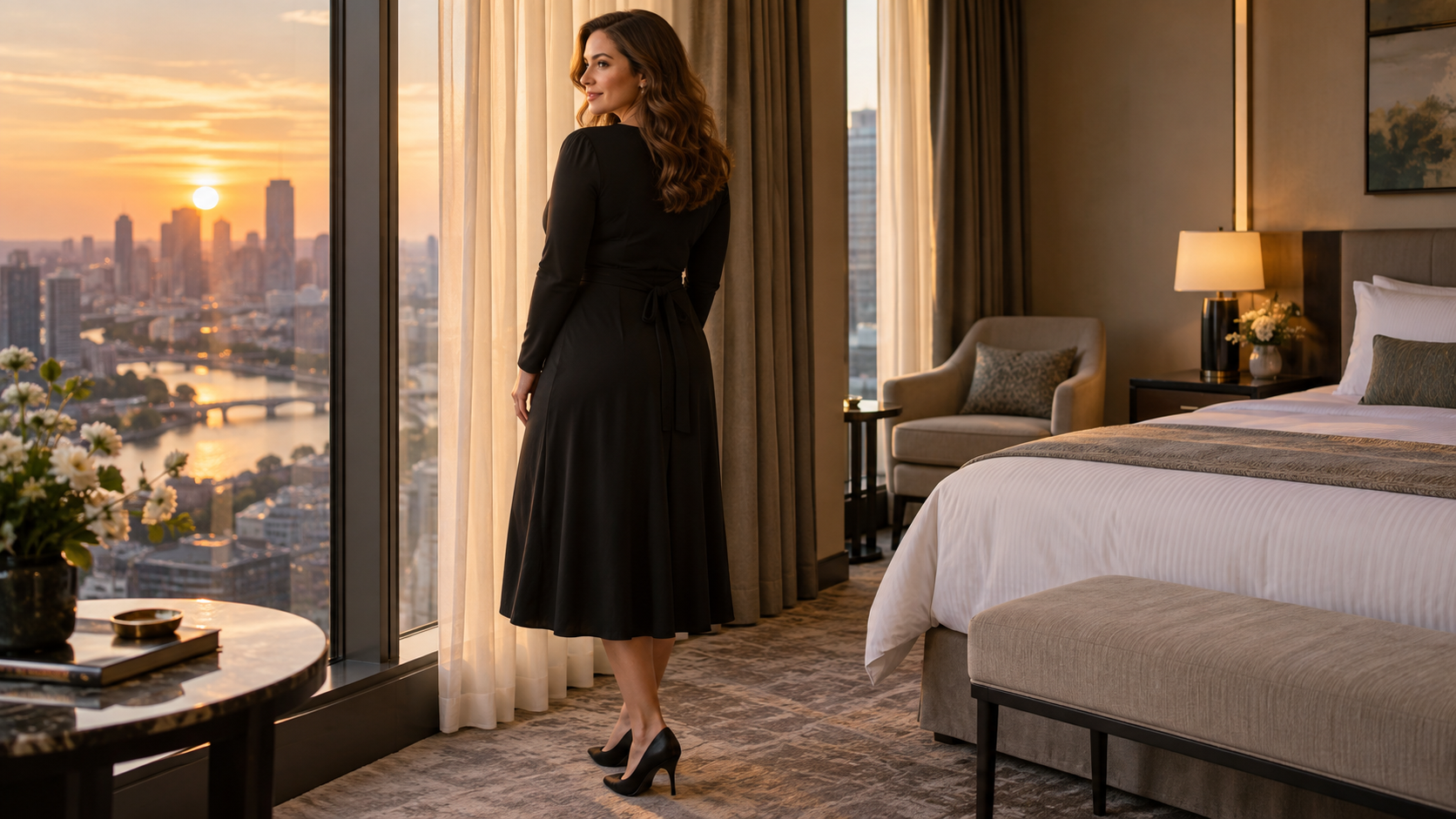
Before booking, check five things
- Window direction: know when direct sun reaches the room.
- Curtains: sheer curtains are useful diffusion; blackout curtains create a controllable dark background.
- Mirror position: check whether the camera can stay outside the reflection.
- Space beside the bed: you need enough room for a tripod and a full-body crop.
- Property rules: ask whether a personal portrait session, tripod, or extra guest is allowed.
Do not rely on a listing image that may show a different room category. Request the exact room type and treat any view as a bonus rather than a guarantee.
Map the room before changing outfits
Walk the room with the camera open, but do not shoot yet. Mark the cleanest angle at the window, chair, doorway, mirror, and bed edge.
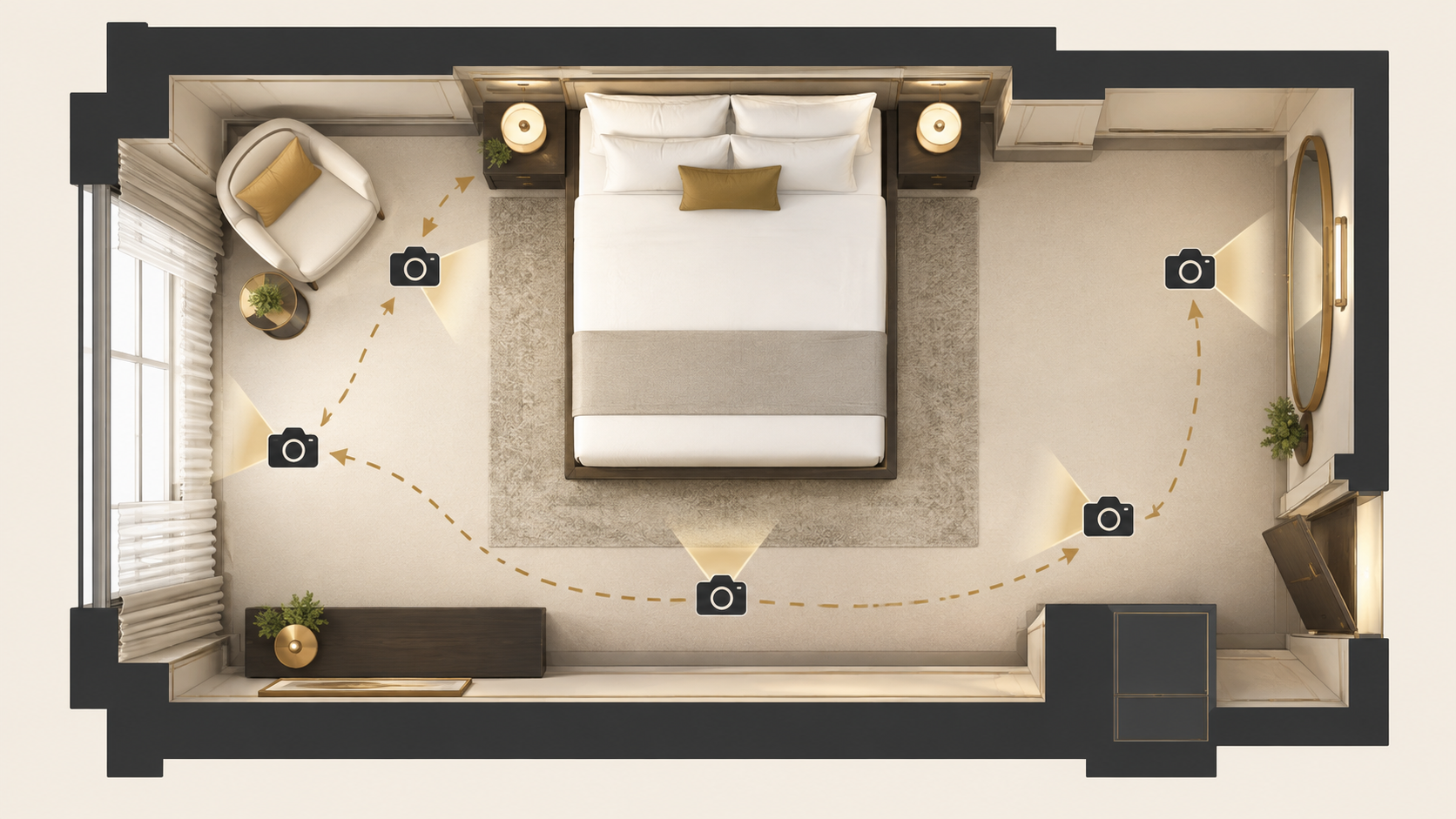
Start with the widest, easiest frames. Move toward close and more intimate portraits after the subject understands the light and camera distance.
17 hotel room boudoir photo ideas
Arrival and doorway
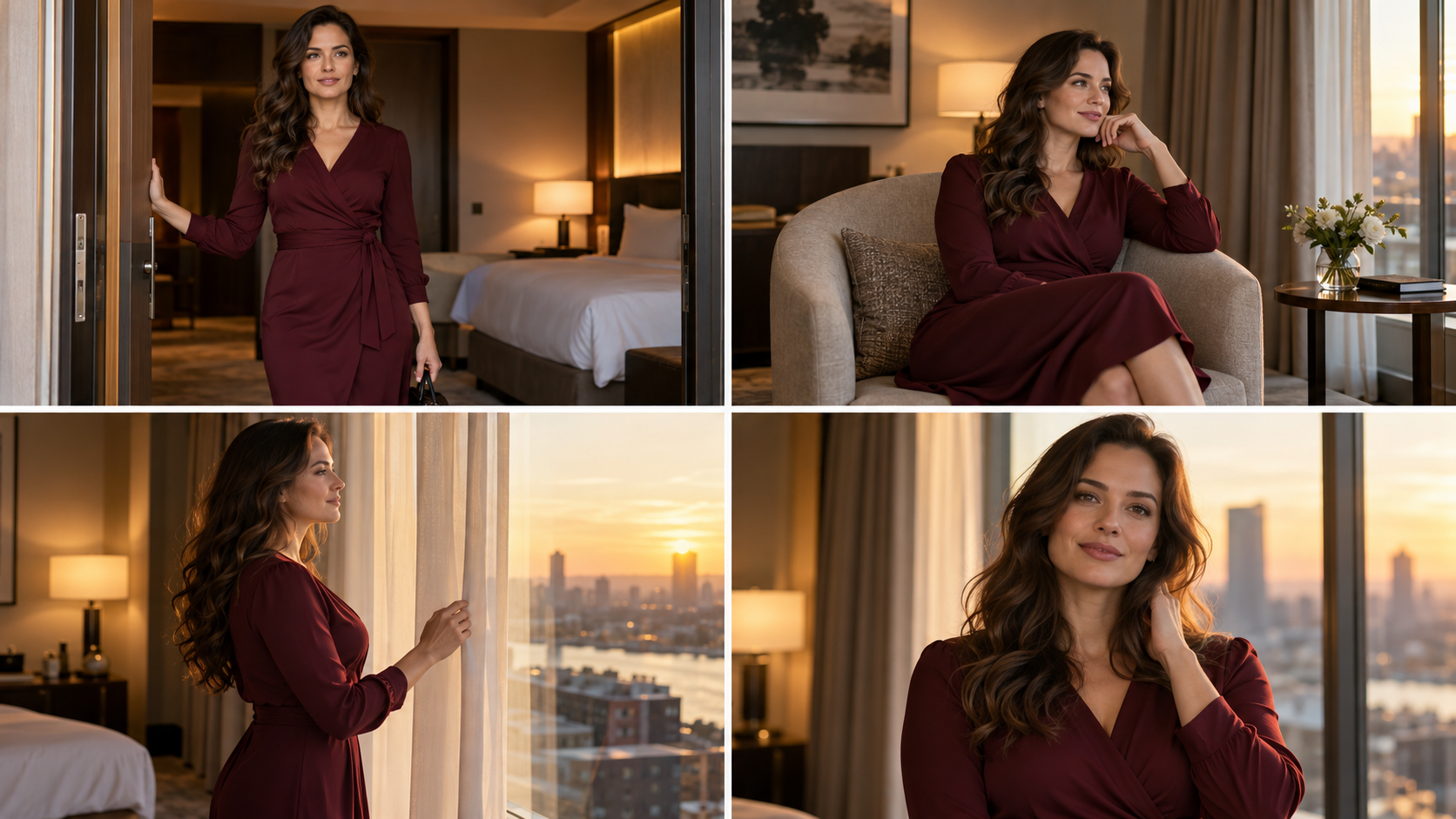
- Doorway pause. Stand just inside the room with one hand on the handle and the body turned toward the window.
- Walk-in frame. Take two slow steps toward the light and shoot between them.
- Back to camera. Enter the room, then look toward the brighter side rather than over the shoulder.
Chair and bench
- Diagonal armchair seat. Sit across one corner so the body creates a long line.
- Forward lean. Keep both feet grounded and rest forearms lightly on the thighs.
- Bench profile. Sit at the bed bench and turn the face toward the window.
- Standing beside the chair. Use the chair back as a hand placement, not a prop to grip.
Window and curtain
- Curtain-side profile. Stand between the sheer and blackout curtain for a narrow stripe of light.
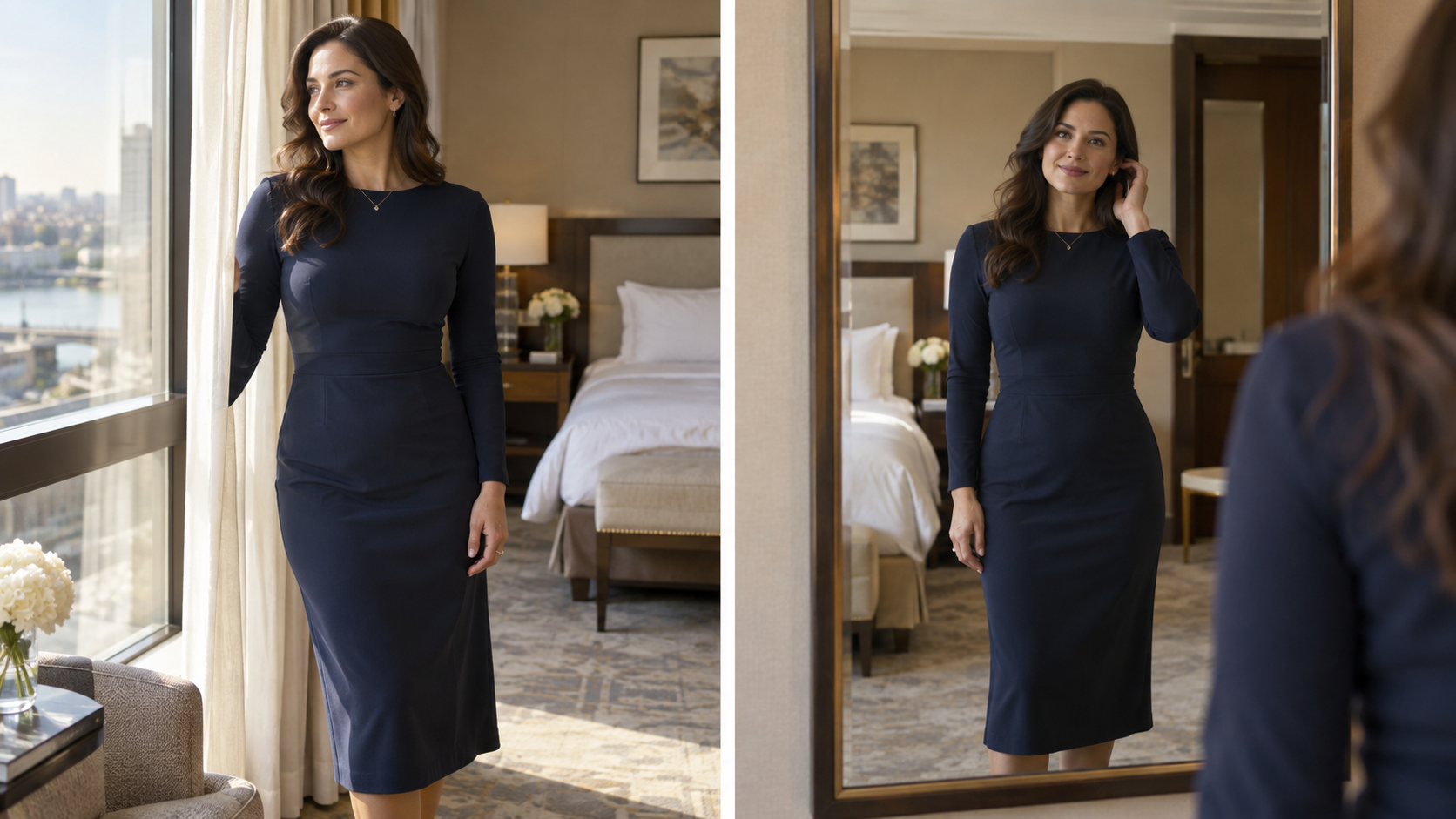
- Hands in pockets at the window. A tailored look makes this feel modern and direct.
- Reflection in the glass. Shoot at dusk when the room begins to reflect without completely losing the city.
- Silhouette with explicit coverage. Lock the pose and wardrobe before exposing for the skyline.
Mirror
- Full-length mirror frame. Move the camera sideways until it disappears beyond the mirror edge.
- Mirror plus direct subject. Include the shoulder in the foreground and the face in the reflection.
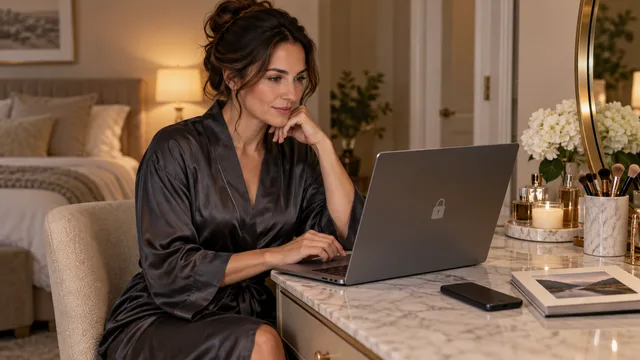
- Seated mirror portrait. Use a vanity chair or bench so the reflection creates a second visual layer.
Bed edge and final close frames
- Upright bed edge. Sit tall with feet on the floor and turn the shoulders toward the brighter side.
- Hands on textured bedding. Make one close frame that focuses on fabric, gesture, and jewelry.
- Golden-hour close portrait. Finish near the window once expression feels relaxed.
Use a sequence, not a random shot list
The room route below builds confidence while the light becomes warmer.
First 15 minutes
- photograph the room empty;
- set exposure and white balance;
- shoot the doorway and standing frames;
- keep the first outfit fully covered and easy to adjust.
Middle 30 minutes
- move to the chair and mirror;
- make the widest compositions before moving furniture;
- check reflections and identifying room details;
- change only one light or prop at a time.
Final 15 minutes
- shoot the window profile and close portrait;
- capture fabric and hand details;
- review focus, coverage, and expression;
- restore furniture and collect every personal item.
The United States Copyright Office says photographic creativity can reflect choices such as angle, subject position, lighting, and timing. 1 A planned sequence gives each of those choices a role instead of treating the room as decoration.
Privacy in a location you do not control
A hotel is temporary, but the files can reveal where the session happened.
- Hide room numbers, key sleeves, receipts, and booking screens.
- Remove luggage tags and travel documents from every reflection.
- Close curtains if the view makes the location obvious.
- Keep housekeeping and hotel staff out of the frame.
- Confirm exactly who may receive, edit, or publish the images.
For commercial image licensing, Adobe notes that recognizability can come from a face, tattoos, distinctive clothing, or specific surroundings. 2 A turned face is not a substitute for consent.
Photos may also contain embedded coordinates. Apple provides controls to remove location metadata before sharing. 3 Review the image and the file information separately.
For self-portraits, put the phone on a stable surface or tripod and use a timer. The iPhone camera includes timer, grid, level, and aspect-ratio controls that help you enter a prepared hotel composition without holding the phone. 4
Pack light
Bring:
- one phone or camera;
- one compact tripod;
- spare battery or power bank kept in the dry luggage area;
- microfiber cloth;
- two complete outfits and one layer;
- safety pins and fashion tape;
- a plain bag for hiding room clutter;
- water and a small snack.
Avoid large lighting stands, candles, confetti, adhesives, smoke, glitter, or anything that can damage the room or trigger hotel safety systems.
You can create a hotel-room portrait direction with MyPhotoAI before booking, then use the result to choose wardrobe and the room features worth paying for. For general posing outside a location-specific workflow, use the broader boudoir photo ideas guide.
The room does not need to be huge. It needs one good window, one clean chair, one usable reflection, and a shot order you can finish before checkout.