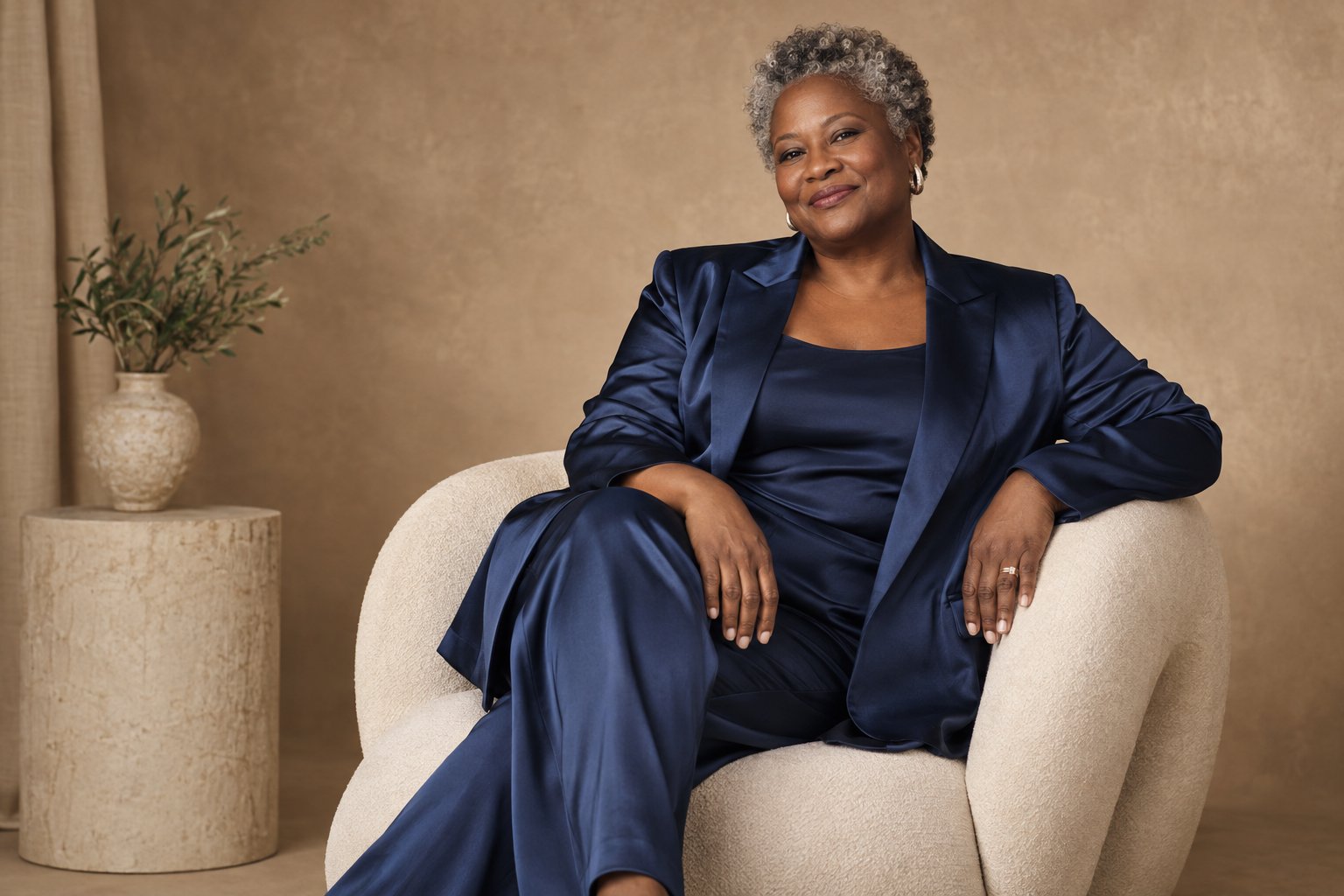
Boudoir over 40 does not need softer focus, younger styling, or a list of things to hide. It needs a clear mood, comfortable movement, and photographs that still look like the person who walked into the room.
This practice session is for adults who want confidence without age correction. Keep natural skin texture. Keep the laugh lines. Choose wardrobe because it supports the story, not because someone assigned it to your age.
Start with the feeling, not an age rule
Pick three words before you choose a pose. Examples:
- assured, warm, direct;
- cinematic, quiet, elegant;
- playful, bright, unguarded;
- minimal, sculptural, strong.
Use those words to edit every decision. If an outfit is beautiful but does not support the mood, leave it out. If a pose photographs well but feels unlike you, change it.
When someone else is taking the photographs, agree on coverage, image review, storage, and portfolio use before the session. For commercial publication, a person can be recognizable through details beyond the face, and Adobe's release guidance emphasizes clear permission when a subject can reasonably be identified. 1
A five-minute comfort warm-up
Do this fully dressed before the formal frames begin.
- Sit with both feet grounded and take three slow breaths.
- Roll the shoulders up, back, and down.
- Shake out both hands.
- Walk to the window and back.
- Settle into a three-quarter stance without looking at the camera.
- Turn the eyes toward the lens only after the body feels comfortable.
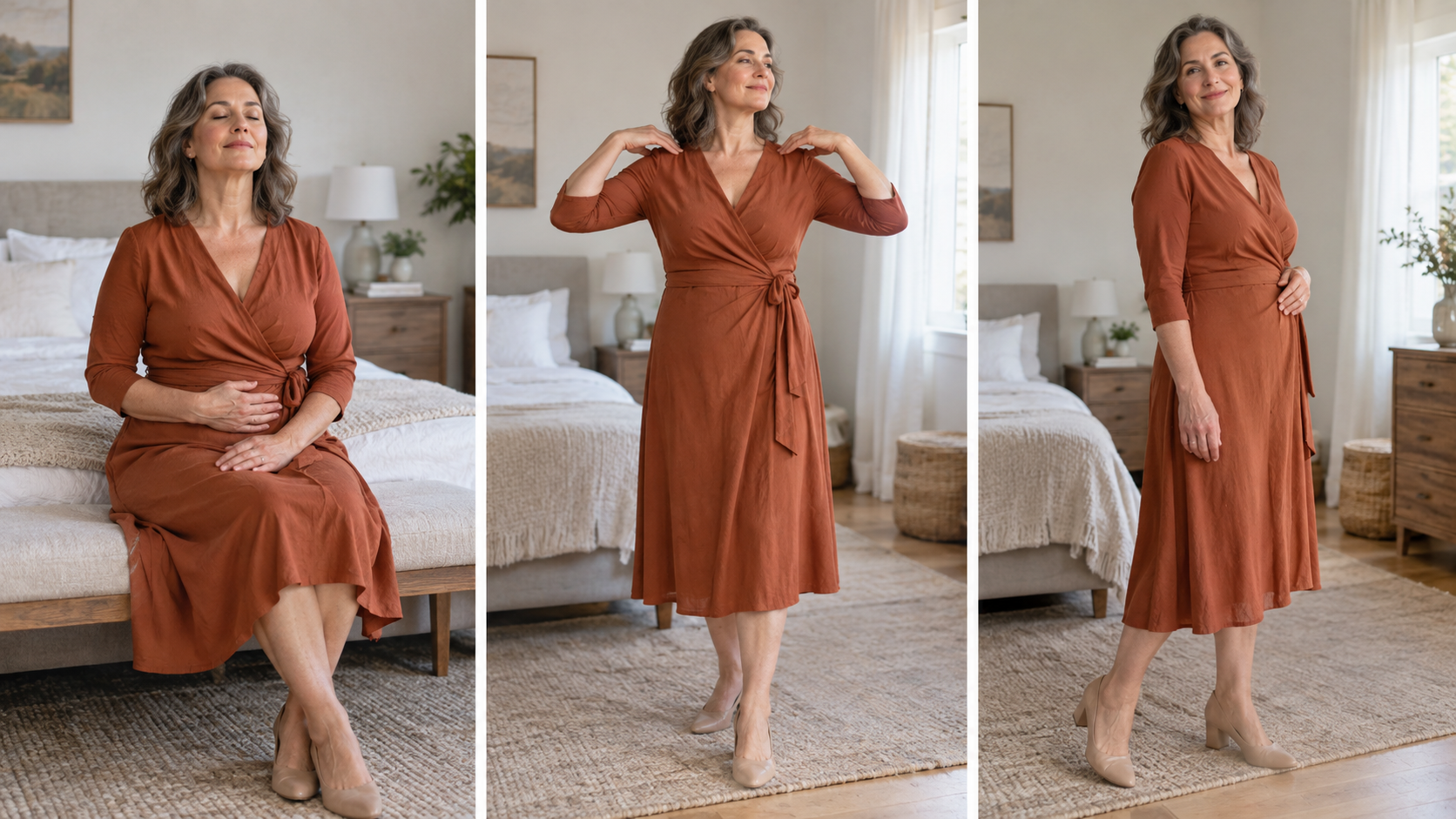
15 boudoir photo ideas for adults over 40
Seated confidence
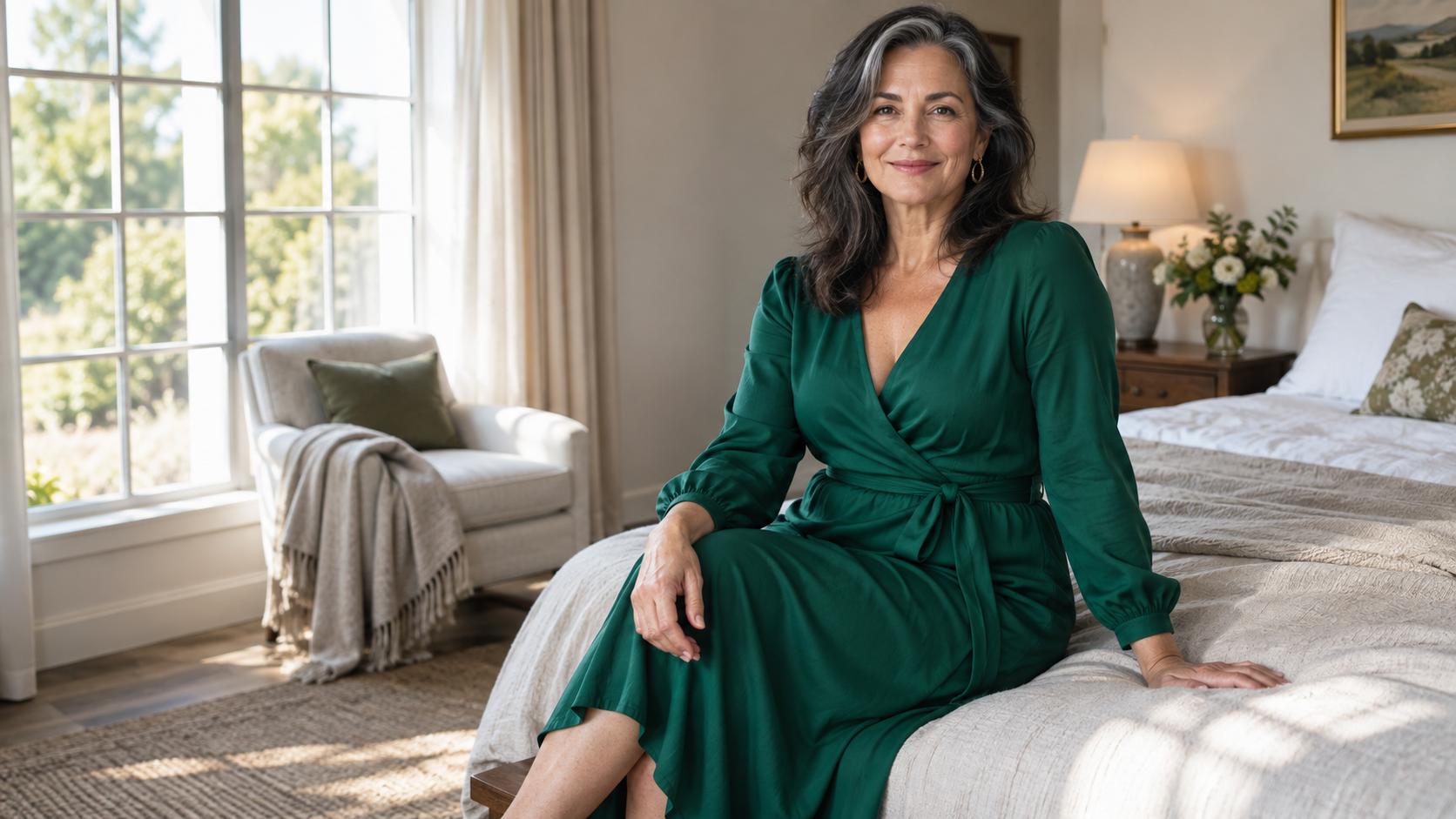
- Bed edge, feet grounded. Sit tall, then lean forward slightly from the hips.
- Armchair diagonal. Sit across the corner rather than straight into the chair.
- Hands relaxed in the lap. Let the fingers overlap instead of interlocking tightly.
- Elbow on chair back. Turn toward the light and keep the shoulder away from the ear.
Standing shape
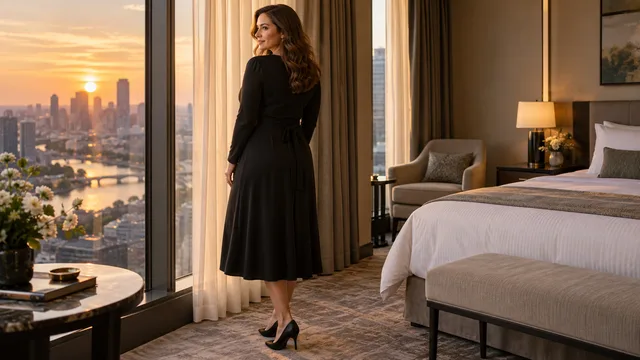
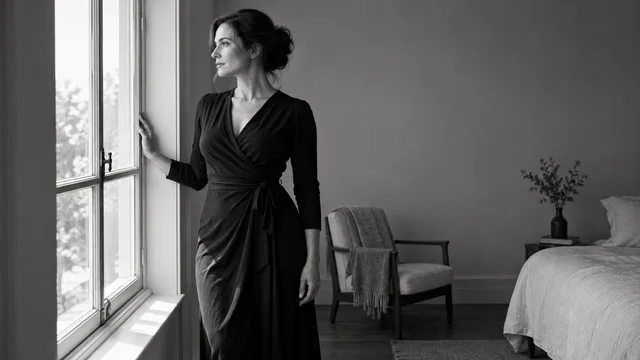
- Window three-quarter. Put weight on the leg farthest from camera and rotate the torso back.
- Hands in pockets. A jumpsuit or tailored trousers make this feel confident rather than posed.
- One hand at the waist. Let the other hand hang or touch a curtain.
- Wall lean. Keep the spine long and touch the wall with the shoulder blade, not the whole back.
- Mid-step. Walk slowly across the light and shoot between steps.
Expression-led frames
- Eyes closed, chin level. Breathe out as the shutter fires.
- Look past the camera. Think of a specific person or memory instead of making a generic expression.
- The interrupted laugh. Start talking, then photograph the transition into a smile.
- Direct gaze. Square the eyes to the lens while keeping the body slightly turned.
Details and movement
- Fabric in motion. Turn slowly so a skirt, sleeve, or robe belt creates a moving line.
- Hands and texture. Make a close frame of hands on satin, knit, or linen as part of the final sequence.
Choose wardrobe by mood
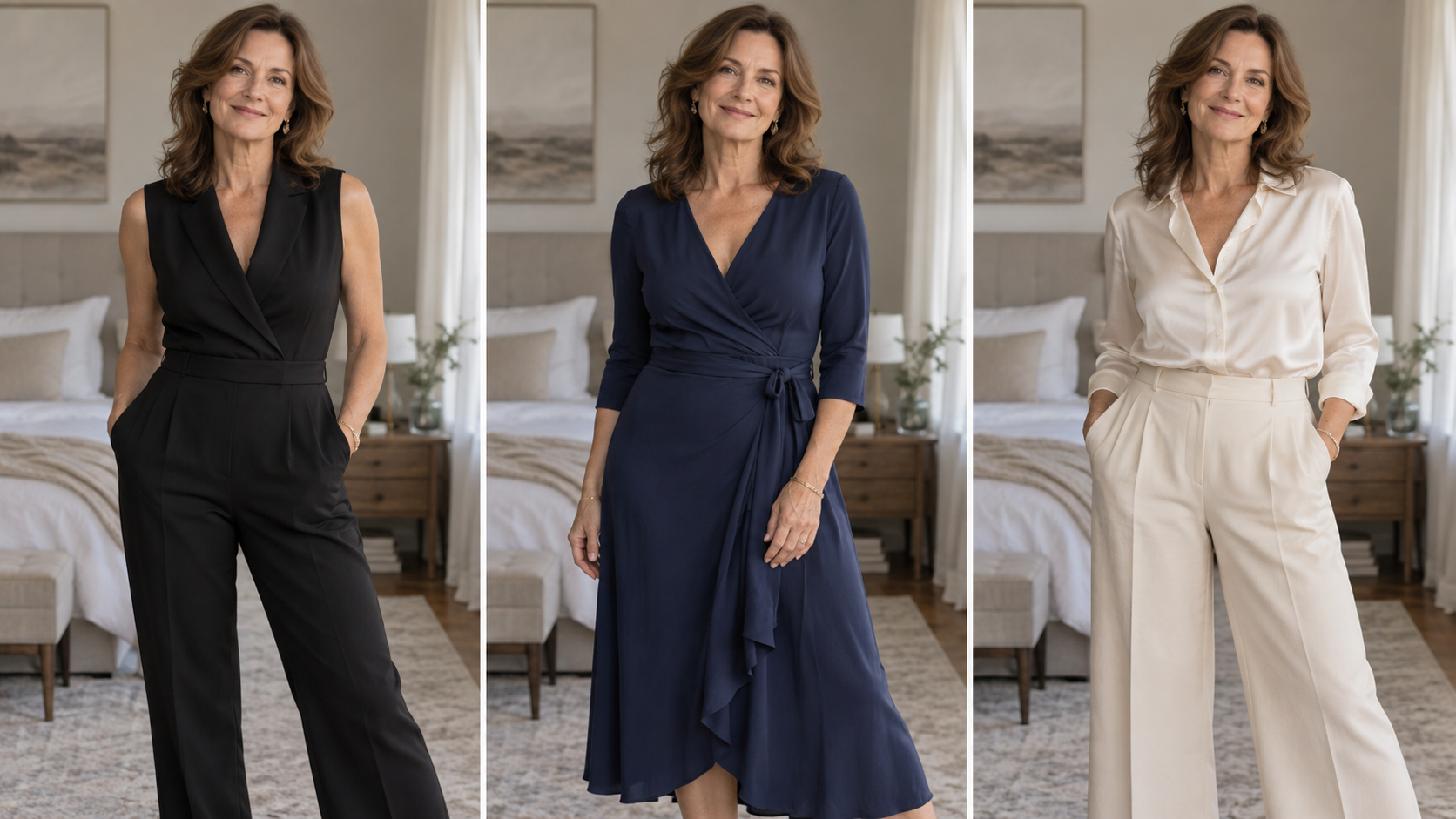
Tailored and strong
A black jumpsuit, blazer, or fitted shirt creates clean lines and works well with direct eye contact.
Soft and intimate
An opaque wrap dress, silk blouse, or long robe catches window light and moves naturally between poses.
Minimal and bright
A cream shirt with wide-leg trousers keeps the portrait modern and lets expression carry more of the frame.
Bring one reliable outfit, one bolder option, and one layer that can change the silhouette. More choices do not always create more confidence.
Use a timer when you want privacy
For self-portraits, place the phone around chest height, step back, and start with a full-body frame. Apple documents how to set the camera timer and use the grid and level, which makes it easier to enter a prepared composition without holding the device. 2
Take five frames per setup:
- neutral expression;
- eyes away;
- eyes back;
- small movement;
- exhale and relax.
Do not inspect every photograph immediately. Constant review pulls you out of the session. Finish the five-frame set, then make one adjustment.
Review the contact sheet without grading your age
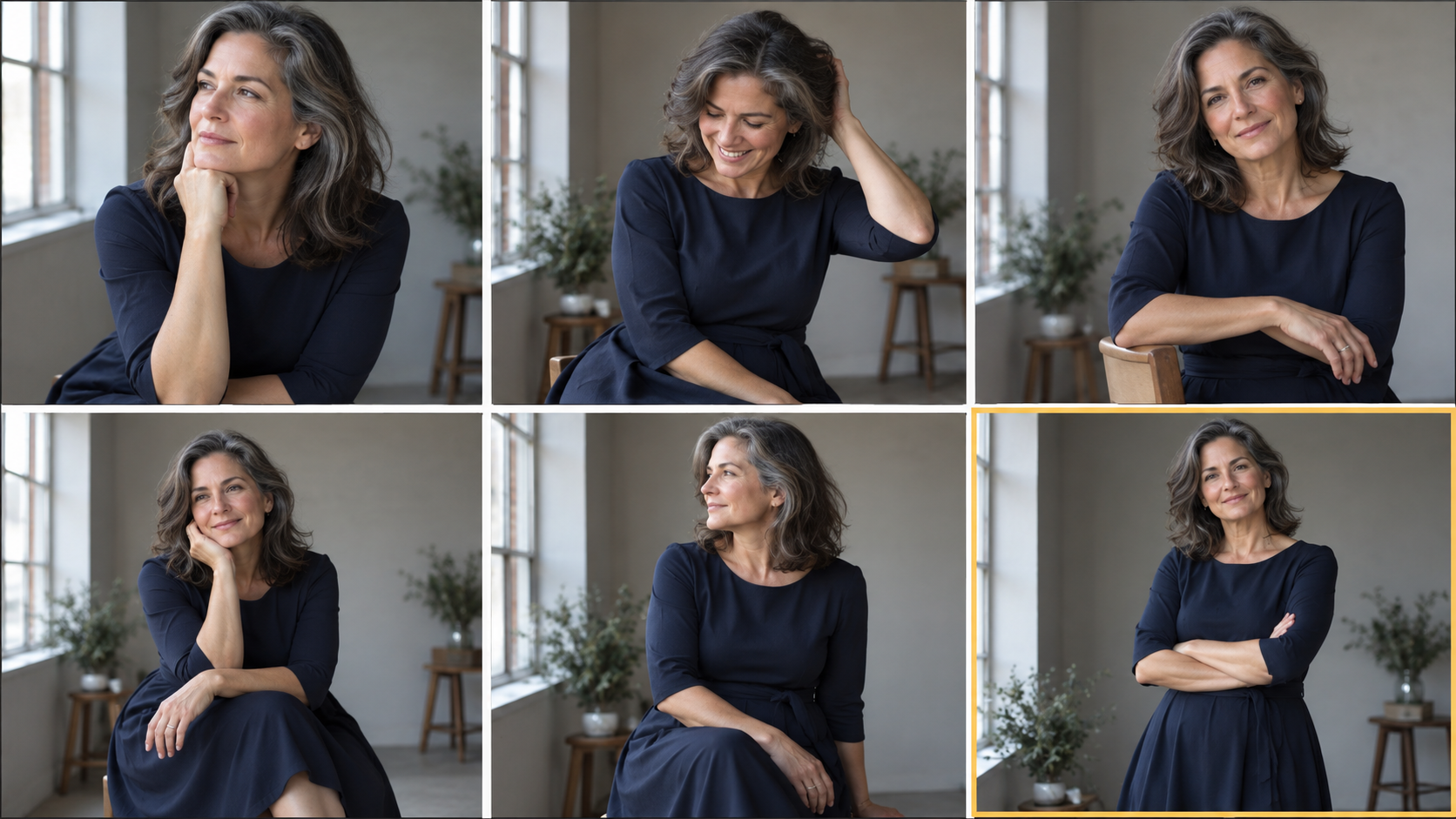
First remove frames with closed eyes, missed focus, or awkward hand collisions. Then ask:
- Does this expression feel like me?
- Is my posture active or tense?
- Does the light reveal the features I wanted to show?
- Does the wardrobe support the chosen mood?
- Would I still choose this image without comparing it to a younger version of myself?
Photography protects creative choices including angle, subject position, lighting, and timing, and the U.S. Copyright Office notes that those decisions are part of a photograph's authorship. 3 That is a useful reminder that a portrait is made through decisions, not through conforming to one body or age template.
For adjacent ideas, explore the plus-size boudoir guide or the broader boudoir photo ideas. You can also create an age-authentic portrait direction with MyPhotoAI and use the result as a mood reference for your own session.
The goal is not to look younger. It is to make a photograph with enough intention that age becomes part of the person, not the subject of the picture.