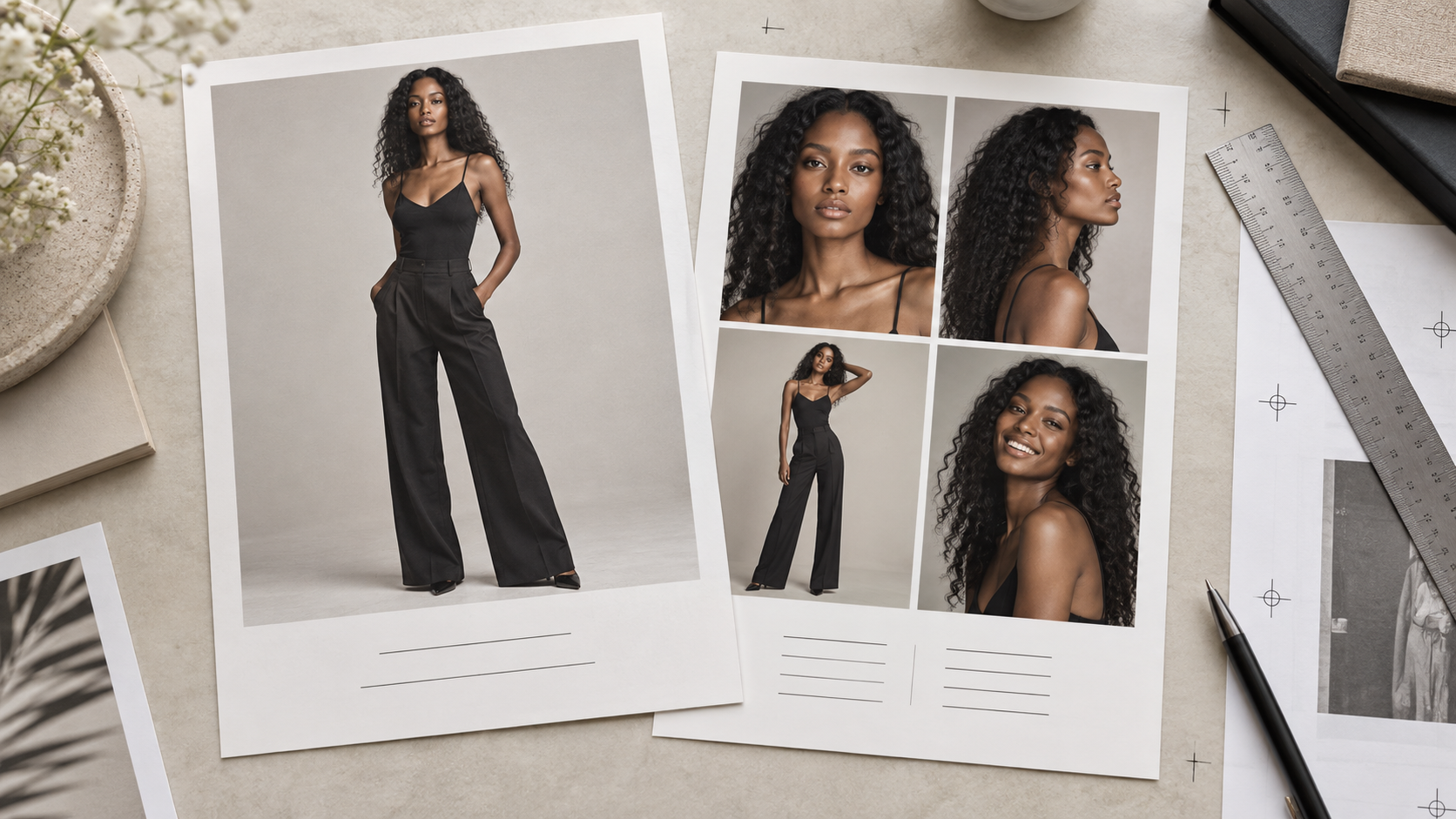
A model comp card is a compact portfolio: one memorable image and your name on the front; a small range of images, current measurements and booking contact details on the back. It is designed to help a client or casting team remember and contact you quickly, not to contain every good photo you have.
A common North American print format is 5.5 × 8.5 inches, but agency and market preferences vary. Confirm the required size, units and contact information before printing a batch.
What a finished comp card contains
Front
- One lead image
- Your professional name
- Agency name or contact route, when requested
Back
- Three to five images that show real range
- Current measurements and relevant physical details
- Market or location when useful
- Agency or booking contact information
CompCard.com’s industry overview describes the same basic front/back structure: one defining front image, then several additional images, measurements and agency contact information.1
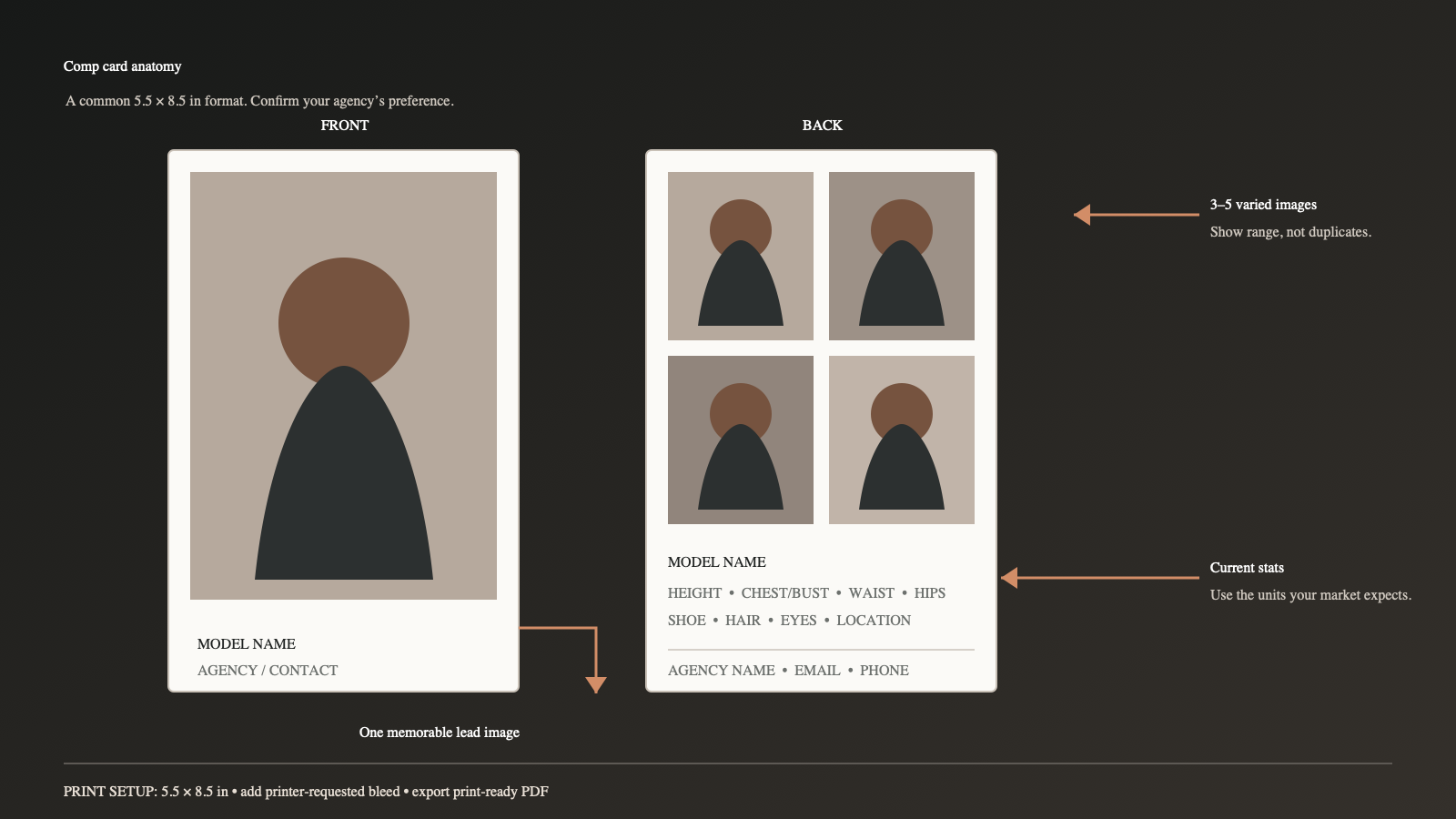
Original MyPhotoAI layout diagram. Use it as a placement guide, then follow your printer and agency specifications.
Choose the front image
The front is not a collage. Use one image that is clear, current and easy to recognize at arm’s length.
For commercial work, that may be a warm headshot or three-quarter portrait. For fashion, it may be a more directional full-length or editorial image. The picture should still show what you can realistically deliver in the room.
Avoid hiding the face behind typography, props or extreme retouching. A comp card is a memory aid, not a poster.
Build range on the back
Four different crops of the same outfit do not show range. Aim for distinct, relevant signals:
- Clean headshot
- Three-quarter or profile
- Full-length image
- Commercial smile, movement or market-specific look
Every image must still look like the same current person. Change wardrobe, expression, setting or energy, not identity.
ModelManagement’s Model Academy guide recommends selecting images that represent the work you do and including measurements plus agency branding or contact information.2
Comp card size and pixel dimensions
The Talent Spot’s comp-card guidelines specify a commonly used printed size of 5.5 × 8.5 inches.3 At 300 pixels per inch, the trimmed document is:
- 5.5 × 300 = 1650 pixels wide
- 8.5 × 300 = 2550 pixels high
That calculation describes the trim area. A printer may request bleed beyond it. For example, 0.125 inch bleed on every edge adds 0.25 inch to each total dimension, making the document 5.75 × 8.75 inches before trimming. Use the printer’s exact specification.
Do not add a generic bleed amount without checking. Some online printers provide a template with their safe area, bleed and crop marks already defined.
What measurements should appear?
Requirements differ by market, representation and type of modeling. Your agency or casting request wins.
Common fields include:
- Height
- Chest or bust
- Waist
- Hips
- Inseam where relevant
- Shoe size
- Hair color
- Eye color
- Location or market
Use the unit system expected in the destination market. Keep the information current, consistent and easy to scan. If you are represented, use the agency’s preferred contact details and branding rather than improvising.
For minors, follow the guardian and agency’s privacy rules. Do not add a home address or personal contact detail merely because a template has an empty line.
Build the layout step by step
1. Set the document
Create two portrait pages at the exact trim size requested by the printer or agency. Add bleed and safe-area guides from the printer’s template.
2. Build the front
Let the lead image occupy most of the page. Keep the name legible, with enough margin that trimming cannot touch it.
3. Build the back grid
Use three to five image boxes with consistent gaps. Give the strongest secondary image the most space. The grid should feel balanced without forcing every picture into an identical crop.
4. Add stats and contact details
Use one type family, clear hierarchy and a small number of sizes. Casting teams should not have to decode decorative labels.
5. Check at real size
Print one proof at 100%. Hold it at normal reading distance. If measurements are difficult to scan or faces are too small, revise before ordering.
Export checklist
- Confirm final trim size with the recipient.
- Use the printer’s bleed and safe-area instructions.
- Keep source photos high resolution.
- Convert to the requested color profile only when the printer specifies it.
- Export a print-ready PDF using the printer’s preset.
- Open the exported PDF and inspect both pages.
- Order or print one proof before a large run.
- Keep an editable source file for future measurement and photo updates.
The downloadable SVG layout accompanying this guide is intentionally simple: it teaches placement and hierarchy without pretending to be your agency’s final branded template.
Common comp-card mistakes
Too many similar images: range disappears.
Outdated measurements or hair: trust disappears.
Unreadable typography: useful information disappears.
Over-retouched photos: the person who arrives no longer matches the card.
Printing before approval: a small requirement change can waste the entire run.
Using a headshot as the whole portfolio: a professional headshot is one component; the back of the card should show more of the work you can book.
Digital comp cards
A PDF or image-based comp card can be useful for email and messaging, but ask what the recipient prefers. Keep a lightweight screen version separate from the print-ready file. Do not compress your only master.
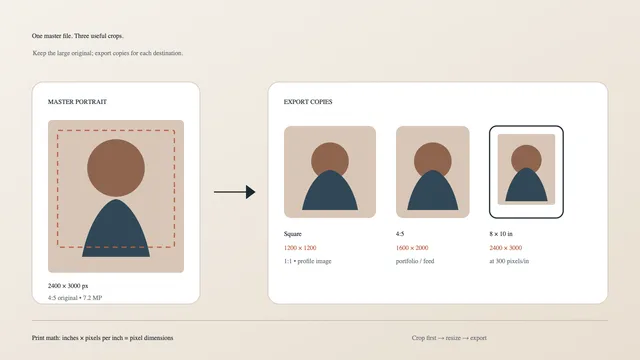
If you need fresh images for the layout, MyPhotoAI can help create a consistent portrait set. Review every result for identity consistency and realistic details before using it professionally. For crop math, use the headshot size and dimensions guide.
FAQ
Is a comp card the same as a portfolio?
No. It is a compact sampler and contact tool. A portfolio can contain a broader body of work.
Is 5.5 × 8.5 inches mandatory?
It is a common format, not a universal law. Confirm the preference of your agency, casting contact or printer.
How many photos should be on a comp card?
Usually one lead image on the front and three to five images on the back. Use fewer strong, different images instead of filling space.
Can I make my own comp card?
Yes, especially while developing your materials. If you are represented, get agency approval before adding its branding or ordering prints.