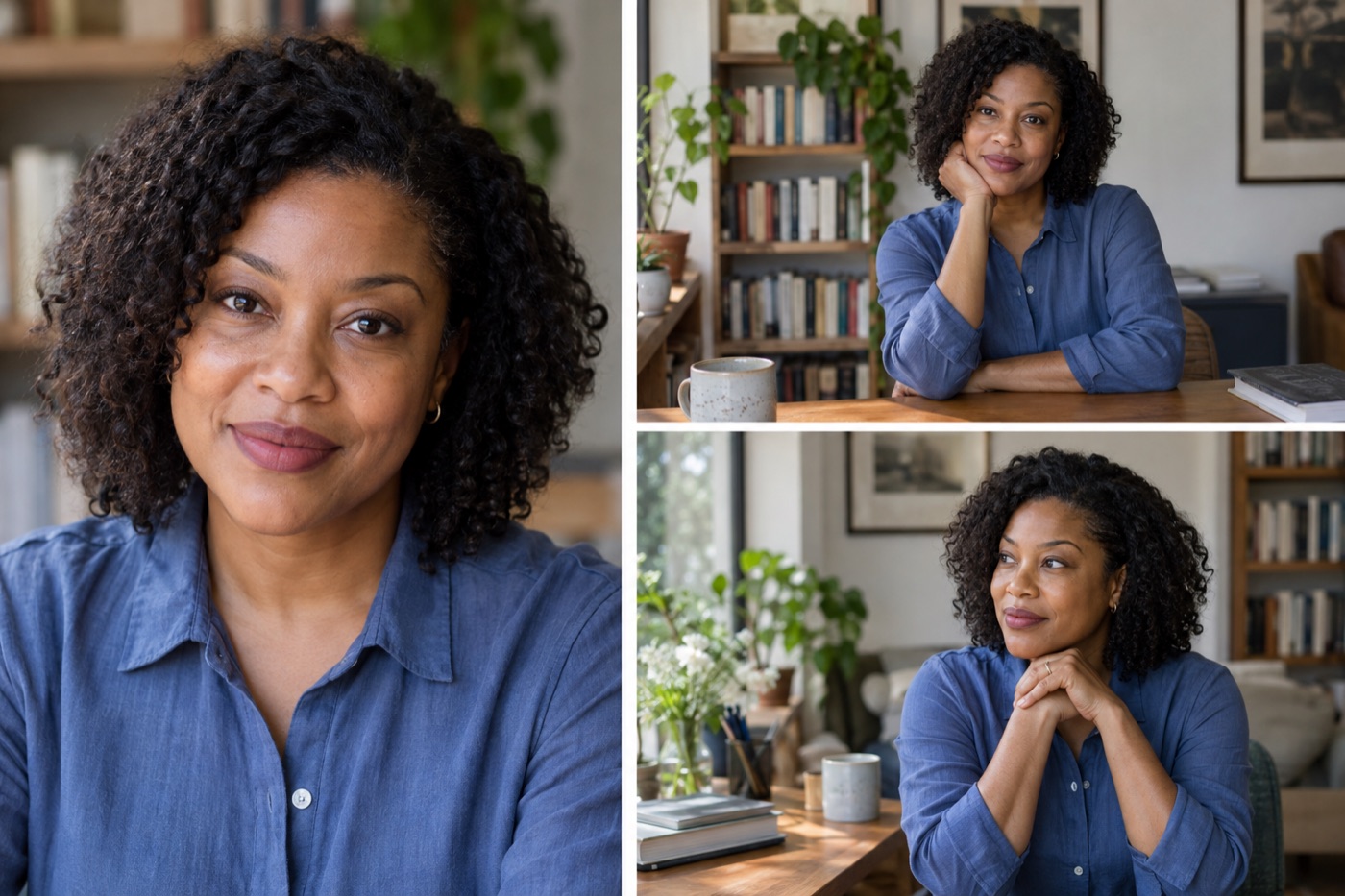
The photo your publisher asks for on Monday may be used on a book jacket, a festival page and a podcast announcement by Friday. One beautiful tight crop cannot serve all three if there is no space around it.
Prepare a small author-photo pack: one clear head-and-shoulders image, one wider portrait with room to crop, and the original high-quality file. Ask the publisher or event team for its exact dimensions and credit requirements before exporting a final version. The three portraits above illustrate how one session can supply different uses; they are not photographs of an actual author.
Shoot for the uses, not a single frame
Penguin Random House advises authors to keep several photographs because an official image can travel across books, social profiles, websites, newsletters and appearances. 1 Its advice also calls for a high-quality source file when the image may appear in print. That makes a little empty space around the head valuable, even if you later choose a close crop.
| Destination | What the photo needs | What to send |
|---|---|---|
| Book jacket or flap | Clear face and a crop approved by the designer | High-quality original plus selected crop |
| Author website | Personality without competing with the bio text | Wide or medium portrait |
| Festival or interview card | Face legible at small size | Tight head-and-shoulders option |
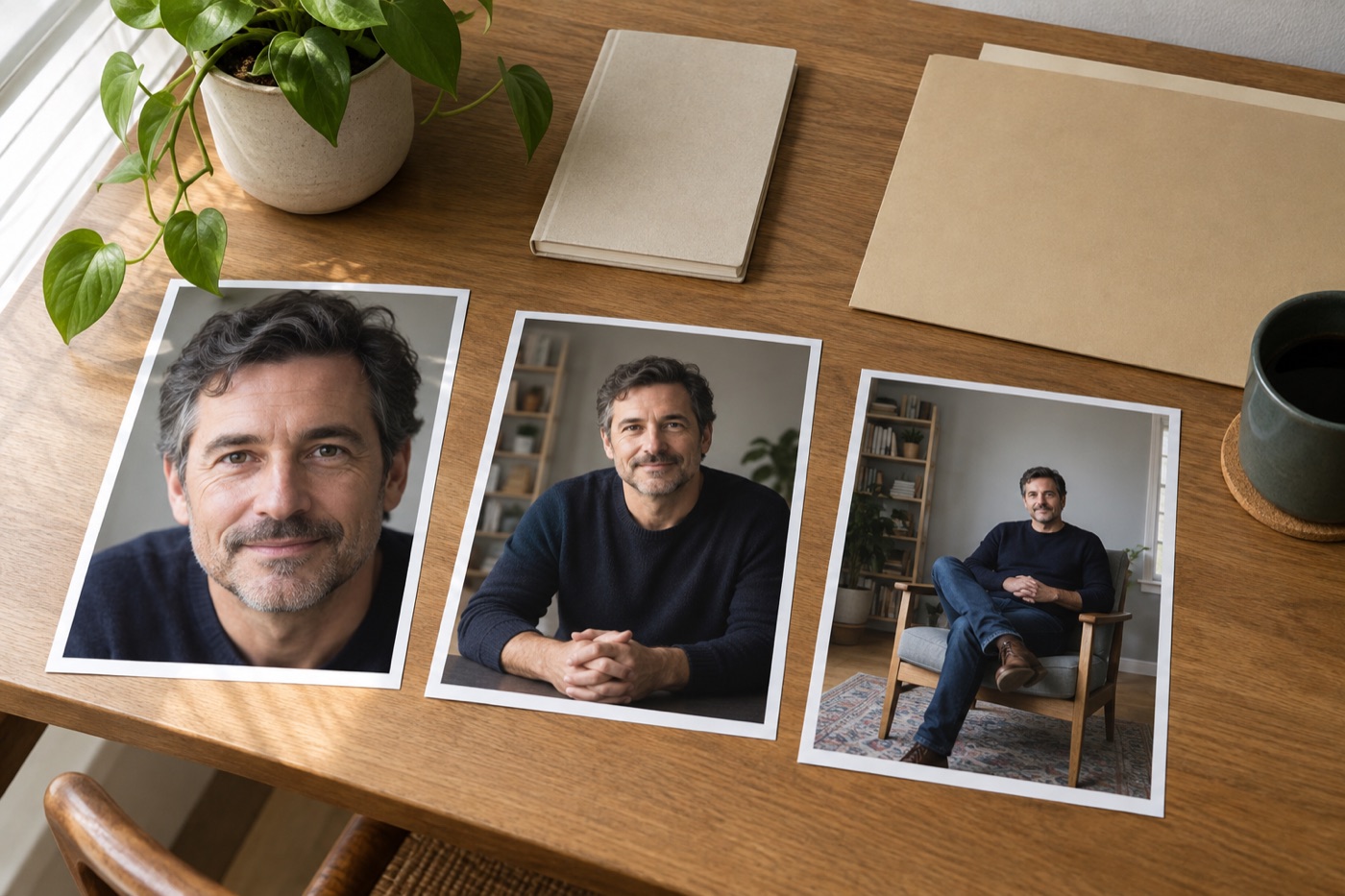
Illustration: the wider original leaves the publicity team choices without enlarging a tiny file.
Do not assume one universal pixel count for every publisher. A jacket designer may need a print-ready file and a specific crop. A social team may want a square. Let them work from the best original rather than upscaling an already-compressed profile picture.
Make the photo fit your work without acting out the plot
An author of funny essays does not need to clutch a quill. A writer of serious nonfiction does not need a dark room and a stern expression. Choose one location, outfit and expression that feel plausible when you are introduced at an event. Try both looking into the camera and looking just off it. Then send the simple image first; keep the more environmental shot as an option.
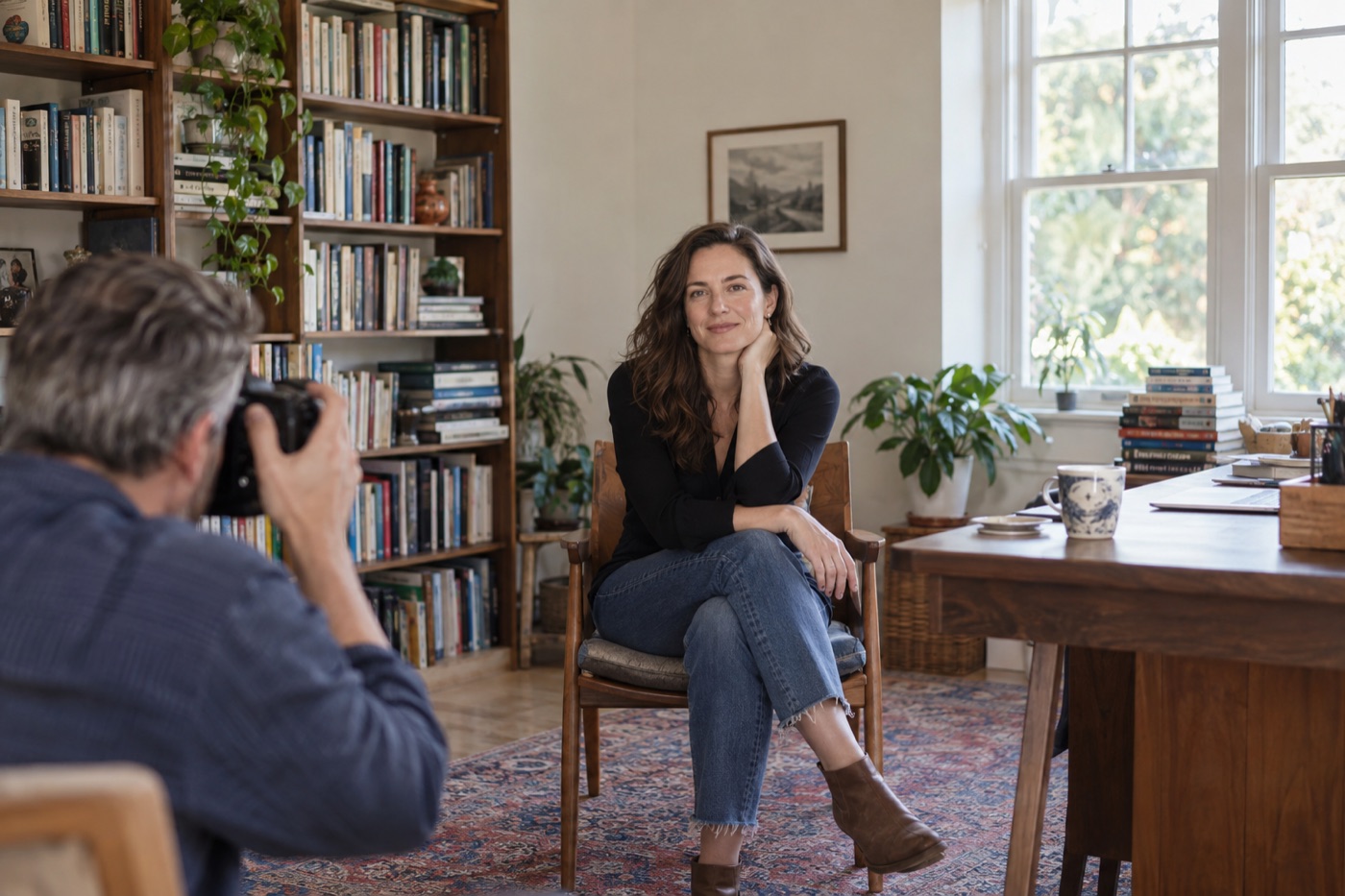
Illustration: a familiar setting can add personality while leaving room to crop.
If you need ideas for the session itself, see author headshot ideas. This guide handles the files you hand over afterward.
For the difference between pixels, aspect ratio and print size, use the headshot dimensions guide before exporting.
Handoff checklist: original file, selected tight crop, wider option, photographer credit or rights note, date photographed, and the destination team's requested specifications.


